E.ON delays Kingsnorth plans but insists it is still in running for CCS funding

Question marks hang over government's CCS policy as falling energy demand prompts E.ON to shelve controversial plans for new coal-fired power plant

By James Murray

08 Oct 2009

Comments: 1

Greenpeace protest

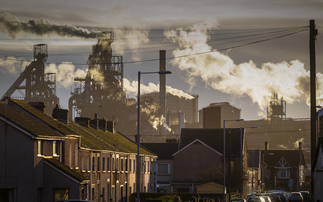
The government's plans for up to four carbon capture and storage (CCS) plants have been thrown into limbo after E.ON yesterday announced its controversial plans for a new coal-fired power station at Kingsnorth in Kent will be postponed indefinitely.

The German energy giant issued a statement to green groups yesterday confirming it will "defer an investment decision on the Kingsnorth proposals for up to two to three years". It blamed the global recession for the decision, arguing that falling energy demand "has pushed back the need for new plant in the UK to around 2016".

The company insisted that it remains committed to the development of cleaner coal and carbon capture and storage. However, the decision will raise serious questions about the future of the government's £1bn competition to build a CCS demonstration plant, as well as its wider plans to build up to four CCS plants.

Kingsnorth is one of three contenders for the government's £1bn competition, alongside Scottish Power's Longannet plant and the Peel Energy consortium's proposals for a plant at Tilbury in Essex.

Speaking to BusinessGreen.com, a spokesman for E.ON said that " nothing much has changed" with regards to the competition process, and that the company still wished for its bid to be considered.

A spokesman for the Department of Energy and Climate Change (DECC) confirmed that E.ON remained in the running for the government's CCS funding. "E.ON's decision to delay its proposed project is a response to the global economic situation and it remains committed to developing clean coal," he said.

"It has not said it is withdrawing from our CCS demonstration competition and we will be discussing with E.ON the implications for this and for its planning consent application."

The decision to delay the plant has sparked speculation that the company is attempting to force the government's hand on the issue of CCS funding. The technology remains untested at large scale and industry insiders have suggested that £1bin is unlikely to be enough to build a large-scale CCS plant.

Earlier this year, the government announced that it would not approve any new coal-fired plants without some form of CCS technology and launched a consultation on how to fund the technology, raising the prospect of a levy on energy bills, a new subsidy scheme modelled on the Renewables Obligation scheme, or the use of funds raised through the EU emissions trading scheme.

E.ON's statements have clearly left the door open for the CCS project to be restarted at any time should the issue of funding be resolved.

However, environmental groups, which have engaged in a high-profile campaign against the Kingsnorth proposals, declared victory last night, arguing that the delay greatly increased the chance of no new coal plants being built without CCS technology.

"This development is extremely good news for the climate and in a stroke significantly reduces the chances of an unabated Kingsnorth plant ever being built," said Greenpeace director John Sauven. "The case for new coal is crumbling, with even E.ON now accepting it's not currently economic to build new plants."

His comments were echoed by Andy Atkins, executive director of Friends of the Earth, who said that the decision gave the government the opportunity to switch its focus to low-carbon energy sources. "The government must now show real leadership and say no to all new coal plants which aren't fitted with 100 per cent carbon capture and storage from day one," he said.

"The UK has one of the best renewable energy resources in Europe, but our record on developing green energy is a national disgrace. It's time to make the UK a world leader in developing clean power and cutting energy waste."

However, shadow energy and climate change secretary Greg Clark warned that the government's failure to give the go ahead to Kingsnorth earlier had undermined the UK's long-term energy security.

"This latest news underlines the chaos in Labour's energy policy," he said. "At a time when the government is predicting power cuts by 2017, its plans for new capacity with carbon capture and storage are disintegrating."

Earlier this week, Clark told the Conservative Party Conference that any new Tory government would move quickly to approve plans for new clean coal and nuclear power plants.

The Kingsnorth decision reinforces the conclusion of a new International Energy Agency report, released earlier this week, which argues that the recession had provided world leaders with a unique opportunity to accelerate the transition to a low-carbon economy by delaying investments in carbon-intensive infrastructure.

WHAT DO YOU THINK? Add your comment


Greg Barker has said that despite cuts to solar incentives the industry will continue to grow this year - is he right?

2%

5%

8%

85%

INSIGHT

Submit your email address and we'll send a link to a personal newsletter control panel


Mechanical Integrity Engineer

09 Feb 2012

Mechanical Integrity Engineer, 35,000-45,000, Midlands A global power organization are looking to identify a Mechanical Integrity Engineer to become part of a globally accalimed engineer department. Delivering R&D Projects in relation to the business' GAS and Steam Turbine operations - the role will challenge the engineers mechanical design capabilities and integrity of company products. The succe

APC

Guidelines for specification of data centre power density

The science and practical application of an improved method for the specification of power and cooling infrastructure for data centres

Quocirca

Powering the data centre

A look at alternative approaches to managing energy for cost and/or sustainability reasons in data centres