17 Sep 2008
A row has erupted over the UK's ability to address the energy gap over the next decade following the publication today of a controversial report arguing that the government's focus on expanding wind capacity and failure to develop back up nuclear and fossil fuel capacity will lead to widespread power cuts.
The report from energy industry analysts Fells Associates argues that with a third of the UK's generation capacity due to be decommissioned by 2020 as nuclear and fossil fuel power stations are retired, prolonged power cuts could become a common occurrence from 2013.
Critics, including the business secretary John Hutton, immediately accused the report of exaggerating the scale of the threat, while hugely underestimating the ability of renewable energy to address the energy gap.
But speaking to reporters earlier today, report co-author professor Ian Fells, a long term supporter of nuclear power, said that the planned expansion of wind energy could not be delivered quickly enough to plug the gap, while the long-promised expansion in nuclear capacity was also not being built at sufficient pace.
The report, titled A Pragmatic Energy Policy for the UK, argued that the only way to plug the energy gap in the short term is to extend the life of fossil fuel and nuclear power plants, while accelerating the development of a new fleet of nuclear reactors to work alongside increased renewables capacity. It claimed that the need to secure energy supplies was now so urgent that it should take priority over climate change in the government's energy strategy.
Speaking to BusinessGreen.com, report co-author Candida Whitmill, said that while the long term goal had to be to reduce carbon emissions, that could only be achieved with a strong economy and as such, energy security had to be achieved first.
She also argued that the threat of power cuts provided a further incentive for firms to cut their energy use and invest in energy efficiency measures, although she warned that such efforts may help ease energy demand, but would not prove sufficient to solve the problem.
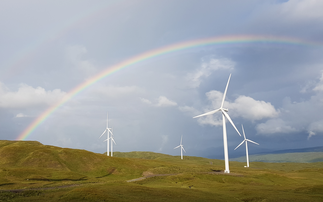
Government projections that an increase in offshore wind capacity to 33GW by 2020 will help plug the energy gap were branded technically impossible by Whitmill, who argued that there was just one installation barge available and that the UK wind industry would struggle to deliver more than 350MW of new offshore capacity a year.
"Wind is not going to happen and even if it did, we'd still need back up capacity [for when the wind is not blowing]," she said. "We have to go with nuclear power which offers the only sufficient base load of power that is low carbon… wind has a role to play, but not at the levels the government is talking about."
She also argued that the development of the Severn Tidal Barrage, an increase in biomass capacity and an extension of the energy grid to France, Germany and Scandinavia could also help deliver a lower carbon energy mix that provides a more secure supply than one based to a large extent on wind.
However, critics lined up to slam the report as inaccurate and biased, accusing it of exaggerating the scale of the potential energy gap and down playing the wind industry's ability to meet government targets.
"Ian Fells overstates the risk of the energy gap, but he also understates what the government's already doing to secure our future supplies and increase our energy independence," said business secretary John Hutton. "That's not to underestimate the task we've got on our hands. Securing future energy supplies for the UK is a matter of national security, so we're not going to rule out any radical options."
Meanwhile, Greenpeace chief scientist Doug Parr said the report meant that Fells had "finally lost the backing of the scientific community", adding that it showed a disregard for the extent to which other countries were fast embracing renewables to address their energy gaps.
"All over the world, jobs are being created in the renewable energy sector," he said. "But Britain has been left behind for too long by the negative, white flag approach to climate change that this report represents. Professor Fells has a long-standing love affair with the technologies of the 20th Century, but as time goes by his fetish for coal and nuclear power looks increasingly naive."
The starkest criticism was delivered by the British Wind Energy Association, which accused the report of "factual inaccuracies" regarding the wind industry's ability to deliver capacity.
Speaking to BusinessGreen.com, Dr Gordon Edge said that far from there being just one barge capable of installing offshore wind farms working in the UK, there were seven already in operation and more to be built over the next few years. He added that Whitmill's claim that the UK could only install 350MW of offshore capacity a year was also "just plain wrong", predicting the sector would be "doing more than that in 2009".
Edge also rejected the report's claim that a huge increase in conventional fossil fuel and nuclear capacity will be required to provide back up for renewables, arguing that rival models had shown that renewable energy could be relied on. "We will require some back up for peak loads, but you need less conventional plants with renewables than we have now," he said. "When you combine wind, hydro, biomass and other forms you can rely on a renewables mix."
LATEST STORIES ABOUT ENERGY
YOU MAY ALSO LIKE
LATEST JOBS
TODAY'S TOP STORIES
HIGHLIGHT
The best green companies in the UK should be preparing their entries for annual BusinessGreen Leaders Awards
INSIGHT
INSIGHT
The science and practical application of an improved method for the specification of power and cooling infrastructure for data centres
A look at alternative approaches to managing energy for cost and/or sustainability reasons in data centres
WHAT DO YOU THINK? Add your comment
Wind is inherently intermittent and unreliable
It boggles my mind that anyone would accept - without challenge - a statement that indicates that wind and solar energy can ever be considered reliable. Wind speeds and directions vary unpredictably and often pass through zero. The sun sets every single day and only provides useful energy for a maximum of 8 hours at any location on the planet. Networking unreliable sources merely produces an unreliable network. The only way that the Danish grid works with a high concentration of wind is that its grid is fully integrated with the rest of the Scandinavian grid which provides the stability of hydro, coal and nuclear stations. Fells is right. Extend the lives of existing nuclear plants and build new ones with due haste. One final thought - who in their right mind believes that building huge wind fields in the ocean is a respectful way to treat the environment? From my point of view as a sailor, those farms look like huge hazards to both navigation and the natural order of life that takes place on, above and under the ocean surface. Rod Adams Editor, Atomic Insights
Posted by Rod Adams, 22 Sep 2008
Retired Chartered engineer
Many professional engineers in electricity and energy have been making the same case for over 10 years. Submissions rasing concerns were made to the 2003 energy White Paper, but the government preferred to believe inexperienced dreamers. Until 15 years ago we were burning 100 million tons of coal per year. how can a few windmills replace that?
Posted by Paul Spare, 17 Sep 2008