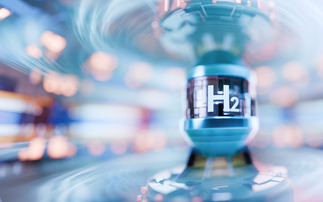
Fuel cell powered ship takes to the water

100-passenger ferry on track for commercial launch before the end of the year

By Tom Young

03 Sep 2008

Be the first to comment

Fuel cell

One of the first fuel cell powered passenger ships in the world has been put into operation successfully.

The 100-passenger ZemShip is being tested in Hamburg with a view to offering commercial trips later this year.

The ship will run almost twice as efficiently as conventional diesel powered ships in terms of energy usage, mainly thanks to a software system that switches between two 48kw fuel cells.

A new hydrogen fueling station installed by German hydrogen manufacturer Linde Group will supply the ship with its main source of fuel. It can also fuel Hamburg's fuel cell powered buses, which have been in operation for two years.

Dr. Gerd Würsig, fuel cell expert at Germanischer Lloyd, who have been responsible for the safety aspects of the ship, said traditional aversion to the use of fuel cell technology in aquatic environments was outdated. "The fuel cell technology is quite unproblematic when used on board a passenger ship," he said. "The passenger will hardly notice any difference compared with a conventional ship, except being astonished to find how quiet it is."

Thomas Melczer, chief executive of Proton Power Systems which provided the fuel cell used in the ship, said the company was now looking to adapt the fuel cell for a number of different applications.

"The core model remains the same and can be adapted for forklifts, cars, boats and stationary systems," he said. "We're looking to go into mass production over the next two years. That will drive the price down and hopefully kick start demand."

The German government provides hefty R&D subsidies for fuel cell technology companies, but Melczer said more is needed. "We need and expect more help from the political side in creating demand for these cells and instigating a cultural shift," he said.

While some critics have claimed that difficulties in producing hydrogen mean fuel cell technologies will struggle to break into the mainstream, Proton estimates that there is enough waste hydrogen produced by European petrochemical plants to power the continents entire public transport system.

WHAT DO YOU THINK? Add your comment


Greg Barker has said that despite cuts to solar incentives the industry will continue to grow this year - is he right?

2%

6%

7%

85%

INSIGHT

Submit your email address and we'll send a link to a personal newsletter control panel


Mechanical Integrity Engineer

09 Feb 2012

Mechanical Integrity Engineer, 35,000-45,000, Midlands A global power organization are looking to identify a Mechanical Integrity Engineer to become part of a globally accalimed engineer department. Delivering R&D Projects in relation to the business' GAS and Steam Turbine operations - the role will challenge the engineers mechanical design capabilities and integrity of company products. The succe

APC

Guidelines for specification of data centre power density

The science and practical application of an improved method for the specification of power and cooling infrastructure for data centres

Quocirca

Powering the data centre

A look at alternative approaches to managing energy for cost and/or sustainability reasons in data centres