South Korea and China lead G20 nations in green stimulus spending

But renewable energy funding needs to double to $500bn annually to limit global warming, UN study warns

By Yvonne Chan in Hong Kong

25 Sep 2009

Comments: 2

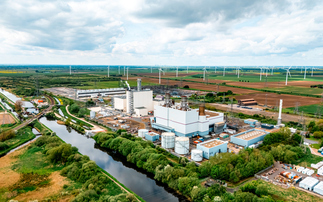
Wind farm

South Korea and China are spending more on green projects as a percentage of their economic stimulus packages than other G20 nations, according to a new study from the UN Environment Programme (UNEP).

The UNEP report, released yesterday, puts South Korea at the top of the list, with 79 per cent of its total economic stimulus spending earmarked for green initiatives.

It was followed by China with 34 per cent and Australia with 21 per cent. France, Germany and the US rounded out the top five, with each nation committing less than 20 per cent.

UNEP executive director Achim Steiner said the figures, provided by HSBC Global Research, were "both cause for optimism and cause for concern". He noted that while "an estimated 15 per cent of the estimated US$3.1 trillion (£1.9 trillion) worth of global stimulus packages [is] green in nature", it is "in many cases well below the recommended one per cent of global GDP which economists advise is the sum that can catalyse real and sustainable, worldwide change".

The report warns that overall investments in renewable energy remain inadequate to reduce carbon emissions in line with the targets scientists believe are necessary to limit average global temperature rises to two degrees – a goal agreed on by G8 nations in July.

In order to achieve the target, global sustainable energy funding needs to more than double to $500bn annually, it says.

The report also notes that there are $250bn worth of fossil fuel subsidies across the G20 that could be diverted help accelerate the transition to low-carbon technologies. It also recommends that governments phase out agriculture subsidies as another way to cut emissions.

Earlier this year, South Korea unveiled a US$85bn plan to invest in eco-friendly industries, while China has announced incentives for solar projects and plans to fund large-scale wind farms as part of its stimulus package.

WHAT DO YOU THINK? Add your comment


Greg Barker has said that despite cuts to solar incentives the industry will continue to grow this year - is he right?

4%

4%

8%

84%

INSIGHT

Submit your email address and we'll send a link to a personal newsletter control panel


Mechanical Integrity Engineer

09 Feb 2012

Mechanical Integrity Engineer, 35,000-45,000, Midlands A global power organization are looking to identify a Mechanical Integrity Engineer to become part of a globally accalimed engineer department. Delivering R&D Projects in relation to the business' GAS and Steam Turbine operations - the role will challenge the engineers mechanical design capabilities and integrity of company products. The succe

APC

Guidelines for specification of data centre power density

The science and practical application of an improved method for the specification of power and cooling infrastructure for data centres

Quocirca

Powering the data centre

A look at alternative approaches to managing energy for cost and/or sustainability reasons in data centres