24 Apr 2009
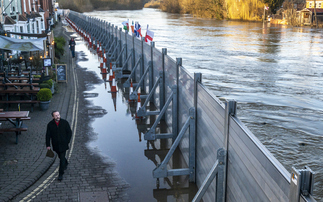
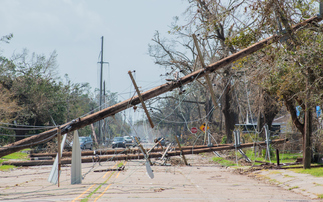
Despite the experience of Hurricane Katrina, the US is putting lives and billions of dollars of assets at risk by failing to adequately prepare for the increased likelihood of coastal flooding and hurricane damage associated with climate change.
That is the stark warning from a major new report by a coalition of investors, insurers, government officials and green groups, which is calling on the Obama administration to impose tough new rules requiring coastal states to develop climate-adaptation plans, impose tighter rules on coastal development, force investors to track coastal flood risks, and step up efforts to protect wetland habitats.
The new policy blueprint, which was developed by the Heinz Center think-tank and the Ceres coalition of sustainable investors, argues that despite a steady increase in the cost of hurricanes to the US economy and predictions that the incidence of dangerous weather events will increase as a result of climate change, the US has not taken many of the basic steps necessary to protect coastal regions.
"Our coasts are threatened, there are reasonable steps to counter those threats, and we as a nation are not yet taking them," the report states, adding that evidence shows that simple measures, such as developing tougher building codes and limiting development in areas with high risks of coastal flooding, " can reduce our risks and our costs by 50 percent or more".
The blueprint cites research from the National Institute of Building Sciences which shows that every dollar spent on mitigation saves society about four dollars on recovery costs. But it warns that despite the economic arguments in favour of action, nearly all US coastal cities "lack adequate land use requirements and building code standards to realize these savings".
One city where action is being taken is in Charleston where Mayor Joe Riley said that the city is already having to combat rising sea levels. However, he warned that a sea level rise of just one foot could inundate some areas of low-lying South Carolina up to a mile inland.
Increases in sea level of significantly over a foot are being widely predicted by the end of the century. According to research presented at a recent climate change conference in Copenhagen, the current rate of sea level rise suggests an increase of one metre by 2100, directly impacting an estimated 600 million people.
"Charleston is one of our nation's treasures and without serious action today to confront these risks, it - and many other American cities - faces an uncertain future," said Mayor Riley. "The pressures on our coast will continue unabated, making regional planning essential to shape growth and to protect our social, economic and natural well-being."
Mindy Lubber, president of Ceres, said there was a strong economic case for investing in improved coastal flood planning and an onus on investors and insurers to pressure governments and businesses into taking action to mitigate coastal flood risks.
The report notes that the insurance industry provides cover for $9 trillion of assets along the Gulf and Atlantic coasts, many of which could be at risk as hurricane intensity increases and sea levels rise.
"Investors are increasingly exposed to economic losses fuelled by coastal development that ignores the intensifying hazards from rising sea levels and stronger coastal storms," observed Lubber. "Reducing risks along the coasts will protect vulnerable populations and the long-term value of investments at the same time."
LATEST STORIES ABOUT RISK
YOU MAY ALSO LIKE
LATEST JOBS
TODAY'S TOP STORIES
HIGHLIGHT
Ernst & Young report urges electric vehicle manufacturers to tap into power of "cool" to increase sales
INSIGHT
INSIGHT
The science and practical application of an improved method for the specification of power and cooling infrastructure for data centres
A look at alternative approaches to managing energy for cost and/or sustainability reasons in data centres
WHAT DO YOU THINK? Add your comment