30 May 2008
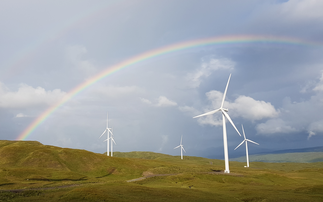
Vestas, the world's largest manufacturer of wind turbines, has today urged political leaders to focus more on increasing capacity from onshore wind farms, amid warnings that the cost of installing offshore wind turbines will continue to rise.
Speaking to BusinessGreen.com, Peter Kruse, senior vice president for group communications at the Danish firm, said the level of political and media attention granted to the offshore wind sector is completely out of proportion to the size of the market.
"Offshore wind represents less than one per cent of the wind energy market and that is likely to continue," he said. "The simple reason is that it costs double to build and operate an offshore farm – we just don't have the people and the cranes to do the job."
He added that to reach the EU target of having 20 per cent of energy coming from renewable sources by 2020, onshore wind would have to play a major role. " The only way forward is more turbines in virgin ground onshore," he argued. " Politicians want offshore so they can avoid the Nimby discussion, but they are allowing a tiny minority to force the rest of the population to pay double for renewable energy."
The UK government, for example, last year committed to building 33GW of offshore wind capacity – enough to power all the homes in the UK – despite concerns about the costs.
The warning from Vestas comes as analyst Cambridge Energy Research Associates (CERA) yesterday published new research warning that supply chain bottlenecks and increased capital will further drive up the cost of offshore wind.
"Big things are expected of offshore wind but this fledgling sector could be at risk given ongoing increases in capital costs, especially if government subsidies do not keep pace," said CERA senior director Matt Brown. "Further increases of 20 per cent in offshore wind capital costs over the next few years should be expected. That means capital costs will increase from €2,300 (£1,800) per kilowatt to €2,800 (£2,200) per kilowatt."
The report warned that costs were being driven up by both the increasing cost of raw materials and specific "pinch points" within the supply chain, such as a shortage of the barges needed to install offshore wind turbines.
Currently only one of the existing purpose-built vessels, along with a few barges with the necessary modifications and large barges used in the oil and gas sector are capable of installing larger five-megawatt wind turbines. "With this pinch point companies should consider investment in installation vessels, as this part of the supply chain is where the higher value will be found," Brown said.
LATEST STORIES ABOUT ENERGY
YOU MAY ALSO LIKE
LATEST JOBS
TODAY'S TOP STORIES
HIGHLIGHT
Model X sports Back to the Future-style "falcon doors" and is set to go on sale in 2014
INSIGHT
INSIGHT
The science and practical application of an improved method for the specification of power and cooling infrastructure for data centres
A look at alternative approaches to managing energy for cost and/or sustainability reasons in data centres
WHAT DO YOU THINK? Add your comment