08 Dec 2009
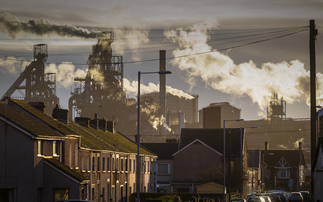
The world's biggest refinery for making biofuels from wheat was unveiled at Wilton on Teeside yesterday, as the company behind the giant facility confirmed production will begin before Christmas.
The £250m Ensus plant will turn wheat into transport fuel, animal feed and usable carbon dioxide for the food and beverage sector.
The company said it has already struck a 10-year deal with Shell, which has seen the oil giant agree to purchase 400 million litres of bioethanol a year to turn into transport fuel.
It added that the plant will result in 100 new jobs, with a further 2,000 created when the agricultural, transport and engineering activities that support the facility are taken into account.
However, Alwyn Hughes, chief executive of Ensus, warned that the new plant's future prosperity rested on the government retaining controversial targets for biofuel use.
Speaking to the Northern Echo yesterday, he warned that a lack of certainty over the future of the targets was jeopardising the development of the biofuel industry.
"The government introduced targets for biofuels and a couple of months after introducing them slowed them down," he said. "That was damaging to investor confidence in the wider renewable energy sector."
The government ruled that under the Renewable Transport Fuels Obligation the amount of biofuels in petrol and diesel should now reach five per cent by 2014, rather than the original 2011 date.
The decision was taken on the back of the Gallagher Review, which warned that demand for biofuels created by EU targets was indirectly contributing to deforestation and changes in land use in the developing world.
Green groups sceptical about the environmental benefits that arise from biofuels made from food crops welcomed the decision. However, green businesses, including the Renewable Energy Association, have expressed concern that the ab sence of regulatory certainty is damaging the biofuels industry.
Hughes said that the new Ensus plant will be doubly beneficial to the environment, noting that as well as producing low-carbon biofuels, it will also produce 350,000 tonnes of animal feed a year, which will reduce the need for feeds such as soya that can be grown on deforested land.
LATEST STORIES ABOUT TECHNOLOGY
YOU MAY ALSO LIKE
LATEST JOBS
TODAY'S TOP STORIES
HIGHLIGHT
Everyone welcomes Greg Barker’s pledge to grow the solar industry, but with the small print promising to shrink the sector this year firms are divided on how to respond
INSIGHT
INSIGHT
The science and practical application of an improved method for the specification of power and cooling infrastructure for data centres
A look at alternative approaches to managing energy for cost and/or sustainability reasons in data centres
WHAT DO YOU THINK? Add your comment