Report claims CCS will be commercially viable by 2030

But giant subsidies needed to kick start demonstration projects

By BusinessGreen.com Staff

23 Sep 2008

Be the first to comment

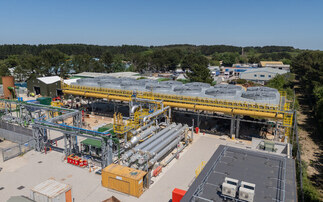
Cooling towers

Carbon capture and storage (CCS) systems could be installed and operated across Europe without public subsidy, but only if governments move fast to fund the first generation of demonstration projects.

That is the conclusion of a new report from management consultancy McKinsey & Co, which argues that not only could CCS technologies deliver deeper emission cuts than is widely expected, but they could also prove to be commercially viable and operate without government hand outs by 2030.

The study, which was undertaken alongside Swedish energy giant Vattenfall, claims CCS could deliver a reduction in global emissions of 3.6 Gigatonnes a year by 2030, near the top end of the 1.5 to four Gigatonne range predicted by experts. It added that CCS could account for about a fifth of the emission reductions that the EU plans to deliver over the next two decades.

The report also predicts that over time "operating experience and scale effects" will deliver a significant reduction in costs, from between €35 and €50 per tonne of carbon dioxide captured for the first wave of commercial plants to between €30 and €45 per tonne by 2030.

It concludes that "costs at these levels would make such CCS installations economically self-sustaining at a carbon price of € 30-48 per tonne CO2 as forecasted by various financial institutions".

The findings are likely to be welcomed by the UK government, which has resisted calls to mandate CCS technology for new coal-fired power plants, arguing that the price of carbon will provide energy firms with a commercial incentive to install the technology.

However, the McKinsey report also warns subsidies of up to €10bn will be required to ensure that the first generation of up to 12 demonstration plants are built. It argues that given the higher costs of demonstration projects, " there is likely to be an "economic gap" between the expected carbon price and lifecycle costs, amounting to some €0.5bn to €1.1bn per project".

The UK government has pledged to invest up to £1bn in one demonstration project, which is up for tender.

However, speaking at the publication of the McKinsey study, Liberal Democrat MEP and European parliament rapporteur on CCS Chris Davies, said further financial support from the EU would be required to fund the new plants.

According to Guardian reports, Davies is proposing a new financing mechanism that would see revenue raised from the EU's central budget used to fund the new plants.

"We need to put this financing mechanism in place very quickly, deliver it to developers, and do it at a European level," he said. "If we leave it to national capitals, I'm not confident the projects will go ahead, and time is already running out."

WHAT DO YOU THINK? Add your comment


Greg Barker has said that despite cuts to solar incentives the industry will continue to grow this year - is he right?

8%

7%

8%

77%

INSIGHT

Submit your email address and we'll send a link to a personal newsletter control panel


Hardware Engineer / Electroni

10 Feb 2012

Hardware Engineer FPGA,VHDL,Embedded C,PCB Layout,Orcad My client a leading design and manufacturing company is looking for an experienced hardware engineer, electronic engineer. This forward thinking organisation will create ample opportunities for the right Hardware electronics engineer. The Hardware Engineer will design, implement, evaluate and verify complete data acquisition systems and the s

APC

Guidelines for specification of data centre power density

The science and practical application of an improved method for the specification of power and cooling infrastructure for data centres

Quocirca

Powering the data centre

A look at alternative approaches to managing energy for cost and/or sustainability reasons in data centres