21 Oct 2009
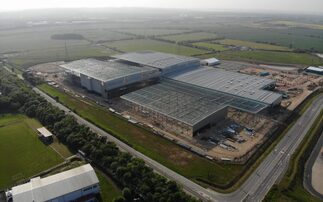
China Guodian Corp, one of the China's largest biggest state-run utilities, has begun work on a US$1.2bn manufacturing base designed to produce both solar power equipment and wind turbines.
According to the state-run Xinhua news agency, Guodian will intially invest US$52.8m to build a facility that will produce 1,000 1.5MW wind turbines annually, before scaling up to manufacture an additional 1,500 2.6MW models each year.
Construction on the plant, located in Yixing city in Jiangsu province, started earlier this week, local media said. The turbines will be produced by the utility's subsidiary, Guodian Union Power Technology, which has an existing facilitiy in Hebei probince.
Meanwhile, Guodian will also spend US$1.17bn to develop thin-film silicon and HIT (heterojunction with intrinsic thin layer) solar cells, said Xinhua. HIT is an emerging solar technology developed by Japan's Sanyo Electric, which it claims has a solar energy conversion rate of 23 per cent.
The products will be produced and sold by Guodian Jintech Solar Energy, a company in which Guodian owns an undisclosed stake. Guodian Jintech produces and sells silicon ingots, silicon wafers, solar modules and stand-alone and grid-connected PV systems. It has a production target of 1.5GW of capacity by 2012.
Guodian Jintech and Guodian Union are among Guodian’s many green power companies which are involved in the development and operation of Chinese wind farms and other renewable energy assets.
The news comes just days after Danish wind turbine manufacturer opened its largest wind turbine production facility in Tianjin province, China.
LATEST STORIES ABOUT FACILITIES
YOU MAY ALSO LIKE
LATEST JOBS
TODAY'S TOP STORIES
HIGHLIGHT
Solar sector warns proposed cuts to feed-in tariffs would make it impossible for them to deliver promised rates of return
INSIGHT
INSIGHT
The science and practical application of an improved method for the specification of power and cooling infrastructure for data centres
A look at alternative approaches to managing energy for cost and/or sustainability reasons in data centres
WHAT DO YOU THINK? Add your comment