16 Jun 2010
It's 2030, only 20 years from now: you have driven to work, there is meat for dinner and you are considering taking your partner to India to visit family later in the year. So far, so normal, but this is also a vision of a zero carbon Britain: where not a single gram of the greenhouse gases blamed for global warming and climate change are emitted to power our future lives.
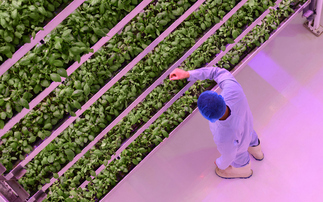
There are changes, however, some invisible, many more obvious. Cars will be electric, and instead of owning them many drivers will borrow from car clubs or lease them. Airlines will no longer fly short distances, and long-haul trips will be a rare treat. Workers from more traditional heavy-energy industries like steel or cement will need to retrain to work in insulating millions of buildings or back on the land, possibly involving big social upheavals. Dinner might be a roast, but poultry or pork because lamb or beef rearing would take up too much land and emit too many greenhouse gases; while mango and bananas will be a luxury as food imports have been halved. And the very landscape of Britain will look different too: instead of green and pleasant fields with grazing Fresian cattle there will be millions more acres of vegetables and grain to eat, and trees for biofuels or buildings.
The vision of Zero Carbon Britain in 2030 is set out in a report published today by the Centre for Alternative Technology (CAT), and backed by organisations including four universities and the Met Office, and experts including Sir John Haughton, former co-chair of the United Nations Intergovernmental Panel on Climate Change.
In just two decades it claims the nation can eliminate greenhouse gas emissions equivalent to 637 million tonnes of carbon dioxide in 2007. Ninety per cent of this would be achieved by eliminating the most wasteful uses of energy, increasing renewable electricity and heating, and transforming land use and farming. The remaining 10 per cent or 67 million tonnes would be "offset" by capturing the equivalent emissions from the atmosphere by growing willow, ash, pine, oak and other trees on land freed up by almost abolishing animal grazing.
Despite setting more ambitious timetables than demanded of Britain, the pace and scale of transition is "entirely possible", said Viki Johnson of the New Economics Foundation and one of the report's authors. "The solutions exist, what has been missing to date is the political will to implement them."
It was also an "ethical responsibility", said Alex Randall, a CAT spokesman. "We have had 150 years benefiting from burning fossil fuels: we have built our schools, hospitals, roads, and everything we need. By making our reductions quickly we allow some scope for less developed countries to use what's left, rather than hogging this for our continuing development."
The blueprint is divided into three key areas: mass insulation of homes and offices, smaller easier-to heat rooms, electric or biofuel vehicles, much less flying and driving and more public transport should cut energy from buildings and transport by 57 per cent; generating a lot more renewable electricity using a range of clean sources, especially off-shore wind, but no nuclear power, should cut another huge tranche and generate millions of new jobs; and freeing up land to grow biofuels and crops which "sequester" the remaining emissions from industry, soil degradation and other harder to eliminate sources.
But, as an example of how much change is needed to achieve this goal, the first electric car buyers' guide, released today by the Environmental Transport Association, has just three cars with more than two seats, with the cheapest being the £20,000 C1 ev'ie.
This article first appeared at the Guardian
BusinessGreen.com is part of the Guardian Environment Network
LATEST STORIES ABOUT TECHNOLOGY
YOU MAY ALSO LIKE
LATEST JOBS
TODAY'S TOP STORIES
HIGHLIGHT
Solar sector warns proposed cuts to feed-in tariffs would make it impossible for them to deliver promised rates of return
INSIGHT
INSIGHT
The science and practical application of an improved method for the specification of power and cooling infrastructure for data centres
A look at alternative approaches to managing energy for cost and/or sustainability reasons in data centres
WHAT DO YOU THINK? Add your comment
The missing steps - smart grids and smart meters
The results of this report are very positive to hear, especially since the steps that need to be taken are simple, yet smart and can be easily and immediately introduced in order to meet stringent European Union targets (which aim to reduce CO2 emissions by 20 per cent by 2020.) However, the two vital ?steps? overlooked by the report are the need to roll-out smart meters and the smart grid on a national scale. These two technologies are vital for any country wanting to reduce carbon use. Why? Because smart grids allow utilities, one of the biggest contributors of CO2 emissions, to manage their distribution grids more efficiently, which means less power needs to be generated, creating fewer emissions. Smart meters, on the other hand, help consumers think more wisely when it comes to their personal energy use, as it informs them of how much energy is being used and when the best times to use it are (so they can adjust their energy usage accordingly). Furthermore, the report states that the move to electric vehicles (EVs) will play a pivotal role in the UK?s ?zero-carbon? future. However, there is no mention of the excessive pressure EVs will place on energy grids, as large volumes of electricity will need to be directed to charging points, which in turn must handle fluctuating demand at peak times. This is where smart grids come into play... by having a smart grid infrastructure; utilities can meet the demands of EVs intelligently. A smart grid is critical to meeting the electricity requirements of EVs, as it will ensure the successful deployment by providing a reliable foundation for the data handling required to record and manage electricity distribution ? from recording and assessing energy usage, to analysing data and sharing information with consumers (via green billing for instance). So yes, a zero carbon future is a definite possibility for the UK and one we look forward to seeing in 20 years time. But, as energy conscious individuals and businesses, we must think more widely than the steps outlined by the Centre of Alternative Energy?s report, by taking into consideration the benefits delivered by alternative, ?smart? technologies, which will help make a carbon free future an even greater possibility.
Posted by Bastian Fischer, 24 Jun 2010
The future is important ? but greener business processes should start today
The steps that the Centre for Alternative Technology (CAT) believes could be introduced to combat the effects of climate change in the future make interesting reading. The disruption caused by the recent volcano in Iceland showed how dependent we are on air travel for leisure and for business. Reducing air travel is problematic for many businesses and will mean significant lifestyle changes for those of us who regularly travel overseas for leisure. Whatever the future holds, organisations can act now to reduce their environmental impact. As a major consumer of natural resources and electricity, IT is directly and indirectly responsible for producing significant amounts of greenhouse gases and toxic waste. One way to reduce this is to work with a third party to develop a Green IT Assessment that examines the use of technology in the organisation, as well as the environmental impact of other areas of the business. Properly implemented, green IT strategies can drive significant reductions in IT-related energy usage. Improvements in IT can also help an organisation to reduce its overall carbon footprint by adopting more efficient working practices, such as reducing travel and commuting through home working and teleconferencing.
Posted by Murray Sherwood, managing director, Externus, 16 Jun 2010