Renewables investment outstrips non-renewables for second year in a row

New capacity in Europe and US exceeds new fossil fuel and nuclear capacity during 2009

By BusinessGreen.com Staff

16 Jul 2010

Comments: 1

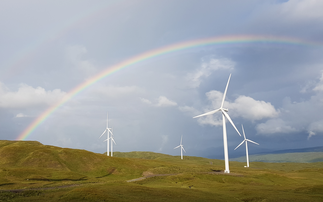
Wind farm

The growing dominance of the renewable-energy sector was underlined yesterday with the release of two new reports revealing that global investments in renewables during 2009 exceeded investment in non-renewable energy sources for the second year in succession.

According to figures from the UN Environment Programme (UNEP) and the International Energy Agency-backed Renewable Energy Policy Network for the 21st Century (REN21) project, the amount of new energy capacity coming from renewable sources in Europe and the US also topped that coming from fossil fuels and nuclear for the second year.

Renewables accounted for 60 per cent of newly installed capacity in Europe and more than 50 per cent in the USA last year. The REN21 report predicted this year or next will see the same milestone reached on a global level, with rapid expansion in Chinese wind farms leading the rapid increase in renewable energy capacity in developing economies.

"Globally, nearly 80GW of renewable power capacity was added in 2009, including 31GW of hydro and 48GW of non-hydro capacity," the report stated. " This combined renewables figure is now closing in on the 83GW of fossil fuel capacity installed in the same year. If the trend continues, then 2010 or 2011 could be the first year that new capacity added in low-carbon power exceeds that in fossil-fuel stations."

The report also confirmed that investment in renewable energy projects, excluding large-scale hydro projects, reached $100bn in 2009, matching investment in new fossil-fuel plants. However, when the $39bn invested in hydro projects last year is taken into account, investment in renewable energy projects comfortably outstripped investment in new coal- and gas-fired power plants.

The UNEP report, which was carried out by London-based analyst firm Bloomberg New Energy Finance, also concluded that the renewable energy sector weathered the global recession far better than had been expected.

"The relatively resilient performance of the sector during the current economic downturn shows that clean energy was not a bubble created by the late stages of the credit boom, but is instead an investment theme that will remain important for the years ahead," said Michael Liebreich, chief executive of Bloomberg New Energy Finance.

However, UNEP Executive Director Achim Steiner counselled that while the growing level of investment in renewable energy is to be welcomed the pace at which new capacity is added needs to increase if the world is to deliver the deep cuts in greenhouse-gas emissions that are required.

"There remains a serious gap between the ambition and the science in terms of where the world needs to be in 2020 to avoid dangerous climate change," he said. "But what this five years of research underlines is that this gap is not unbridgeable. Indeed, renewable energy is consistently and persistently bucking the trends and can play its part in realizing a low-carbon, resource-efficient Green Economy if government policy sends ever harder market signals to investors."

His comments were echoed by Mohamed El-Ashry, Chair of REN21, who advised that the continued expansion of the renewable energy sector remained reliant on government policies.

"Favourable policies now in place in more than 100 countries have played a critical role in the strength of global renewable energy investments recently," he said. "For the upward trend of renewable energy growth to continue, policy efforts now need to be taken to the next level and encourage a massive scale up of renewable technologies."

WHAT DO YOU THINK? Add your comment


The government has warned that large parts of the UK could face serious droughts this spring and summer following record low levels of rainfall this winter. Will your business be taking take early steps to cut consumption?

36%

5%

5%

54%

INSIGHT

Submit your email address and we'll send a link to a personal newsletter control panel


Information currently unavailable.
IBM

Case study

Service provider builds a compact, energy-efficient and scalable IT infrastructure

Quocirca

Powering the data centre

A look at alternative approaches to managing energy for cost and/or sustainability reasons in data centres