GMZ touts heat-to-electricity nanotechnology

Company claims new heat-to-electricity material could bolster energy efficiency of everything from solar farms to refrigerators

By Danny Bradbury

01 May 2008

Comments: 1

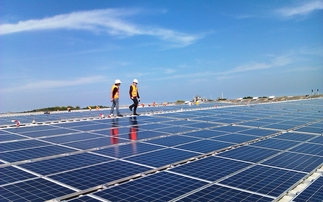
Solar farm

Startup GMZ Energy has prepared a nanotechnology material that it says can convert waste heat into electrical energy. The substance could be used for applications including recovering power from car exhausts and running refrigerators without condensers or coolant fluid, according to executives at the firm.

The Boston-based company uses various materials that it grinds into tiny granules. It then recombines the particles in a way that effectively dissipates heat, slowing down the heat flow and using it to drive electrons for energy production.

The material can convert heat to electricity with an efficiency of between five and 25 percent, said Zhifeng Ren, co-founder of the company and a professor in the Department of Physics at Boston College.

The material could increase the fuel efficiency of a car by around 10 percent, he added, simply by capturing heat from a car's exhaust system and using it to help power the vehicle. Other applications could include self-cooling car seats that produce power.

He also proposes several industrial applications, including using the material to convert heat in thermal solar power plants, as a lower maintenance alternative to the steam driven turbines that traditionally generate power from such systems.

"In industrial power plants, you could also use the material to recover some wasted heat, and improve power plant efficiency by 10 to 20 per cent," he added.

The material can also be used to reduce temperatures to zero degrees centigrade depending on the current drawn, said Ren. Using a silicon germanium alloy, it is possible to tackle temperatures of up to 1000 degrees centigrade, he added. Unfortunately, the price of the bismuth antimony telluride used to handle temperatures of up to 250 degrees has tripled in the past six months.

The company said it should be able to deliver material orders in about three to four weeks, and will be releasing small-scale cooling components for devices such as refrigerators in a year's time.

WHAT DO YOU THINK? Add your comment


Greg Barker has said that despite cuts to solar incentives the industry will continue to grow this year - is he right?

8%

7%

8%

77%

INSIGHT

Submit your email address and we'll send a link to a personal newsletter control panel


Hardware Engineer / Electroni

10 Feb 2012

Hardware Engineer FPGA,VHDL,Embedded C,PCB Layout,Orcad My client a leading design and manufacturing company is looking for an experienced hardware engineer, electronic engineer. This forward thinking organisation will create ample opportunities for the right Hardware electronics engineer. The Hardware Engineer will design, implement, evaluate and verify complete data acquisition systems and the s

APC

Guidelines for specification of data centre power density

The science and practical application of an improved method for the specification of power and cooling infrastructure for data centres

Quocirca

Powering the data centre

A look at alternative approaches to managing energy for cost and/or sustainability reasons in data centres