US states still lagging on distributed generation

Still hard for customers to sell electricity back to grid in many parts of the US

By Danny Bradbury

30 Nov 2009

Be the first to comment

solar panel

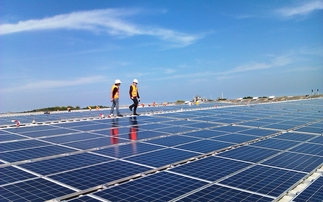
Significant numbers of US states are still lagging behind when it comes to buying renewable energy from customers, according to a report from the Network for New Energy Choices, an advocacy group promoting equitable and safe energy choices.

The report analysed the performance of individual states in two areas: net metering, and interconnectivity.

Net metering makes it possible for customers producing their own renewable energy to sell that power back to the grid when they have a surplus. Interconnection measures how easy the state makes it for a customer to connect their power-generating equipment and meter to the grid.

Sixteen states received a failing 'F' grade in one of the two categories outlined by the report. Georgia, Idaho and Indiana scored 'F's for net metering.

When it came to interconnection, far more states were lacking. Arkansas, Hawaii, Iowa, Kansas, Kentucky, Louisiana, Minnesota, Missouri, Montana, Nebraska, South Carolina, Utah and Wyoming all scored an F for interconnection, as did Georgia.

An F for net metering means having a policy that deters customers from taking part, while an F for interconnection means that a state has thrown up many barriers to connection.

"Few to no generators will experience expedited interconnection, and few to no state best practices are adopted," the report's scorecard said, describing an F score.

However, Georgia wasn't the worst state in either category; eight states had no statewide net metering at all, including Alabama, Alaska, Mississippi, South Dakota, and Tennessee. And ten had no interconnection standards.

Several states excelled, however, with A scores for net metering, and Bs for interconnection. These included California, Colorado, Maryland, New Jersey, Oregon, and Pennsylvania.

"The actions of these states provide a framework to understand what laws and regulations drive a renewable energy industry," said Kyle Rabin, director of the NNEC.

WHAT DO YOU THINK? Add your comment


Greg Barker has said that despite cuts to solar incentives the industry will continue to grow this year - is he right?

8%

7%

9%

76%

INSIGHT

Submit your email address and we'll send a link to a personal newsletter control panel


Hardware Engineer / Electroni

10 Feb 2012

Hardware Engineer FPGA,VHDL,Embedded C,PCB Layout,Orcad My client a leading design and manufacturing company is looking for an experienced hardware engineer, electronic engineer. This forward thinking organisation will create ample opportunities for the right Hardware electronics engineer. The Hardware Engineer will design, implement, evaluate and verify complete data acquisition systems and the s

APC

Guidelines for specification of data centre power density

The science and practical application of an improved method for the specification of power and cooling infrastructure for data centres

Quocirca

Powering the data centre

A look at alternative approaches to managing energy for cost and/or sustainability reasons in data centres