13 Oct 2009
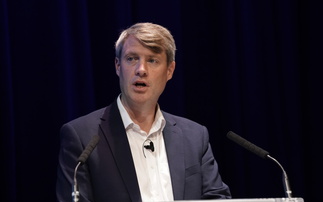
US energy secretary Steven Chu today highlighted the critical importance of developing carbon capture and storage (CCS) technology, predicting that it was highly unlikely the US, China and India would stop burning coal.
Speaking at the Carbon Sequestration Leadership Forum in London earlier today, Chu pointed to International Energy Agency (IEA) figures that estimate 100 CCS plants will be needed by 2020, scaling up to 850 plants by 2030 and 3,400 plants by 2050.
Current research by the CCS Institute suggests there are 273 CCS projects underway worldwide, but only 64 are on a commercial scale. Of these only seven are end-to-end operational, and none are actually generating power.
But Chu said that, once successfully developed, many CCS technologies could be transferred to developing countries at relatively low cost. "Many of these things are not really patentable; it's more expert knowledge than Intellectual Property," he said, predicting that as a result the technology could be rolled out rapidly.
He added that this expert knowledge needs to be shared with developing countries as quickly and cheaply as possible. "It's very important to do some demonstrations in developing countries to disseminate knowledge," he said. "I ask developed and developing countries to work together."
His comments appear to run contrary to predictions by a number of governments that early developers of CCS technology will be able to maximise the financial rewards by selling CCS systems worldwide.
The US is investing $10bn in CCS over the next two years and hopes to have seven plants up and running before 2020, Chu said.
The UK has committed to having between two and four plants operational by the same date, while Germany, Norway and Australia are similarly committed to high-profile demonstration projects.
Nobuo Tanaka, executive director of the International Energy Agency, told the forum that CCS must account for three per cent of global carbon abatement by 2020 and 10 per cent by 2030 if emission targets are to be met. "Strong action is needed," he said. "Each year of delay will cost [the global economy] $500bn. "
In related news, a panel of energy company chief executives speaking at the conference all agreed that a cap-and-trade system with a strong carbon price was the favoured market mechanism for introducing CCS.
However, the drop in the carbon price over the past two years has undermined the case for businesses to invest in CCS systems without direct government support, as evidenced by E.ON's decision last week to delay its plans to build a CCS-enabled coal-fired power plant at Kingsnorth in Kent.
LATEST STORIES ABOUT TECHNOLOGY
YOU MAY ALSO LIKE
LATEST JOBS
TODAY'S TOP STORIES
HIGHLIGHT
Solar sector warns proposed cuts to feed-in tariffs would make it impossible for them to deliver promised rates of return
INSIGHT
INSIGHT
The science and practical application of an improved method for the specification of power and cooling infrastructure for data centres
A look at alternative approaches to managing energy for cost and/or sustainability reasons in data centres
WHAT DO YOU THINK? Add your comment