01 Jul 2010
Venture capital investment in clean tech firms during the first half of the year has bounced back to record levels, climbing 65 per cent year on year to more than $4bn (£2.6bn).
According to new preliminary figures from analyst Cleantech Group and consultancy Deloitte, venture capital clean tech investment across North America, Europe, China and India narrowly beat the previous record of $4.02bn set in the first half of 2008, reaching $4.04bn.
The record was set after the second quarter of the year repeated the success of the first three months of the year, with total investments reaching $2.04bn, an improvement of 43 per cent on the second quarter of last year.
"In spite of the persistence of wider concerns about the strength and sustainability of the global recovery, the strong flow of investment dollars to clean tech growth companies has continued in 2Q10, with clean tech venture investment in the first half of 2010 edging slightly ahead of the record total recorded during the first half of 2008," said Richard Youngman, head of global research at the Cleantech Group.
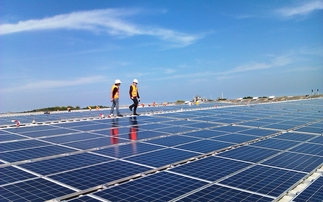
He attributed the strong performance to the resurgence of investor interest in solar firms and a high volume of follow-on rounds, including a number of " blockbuster deals".
However, he also offered a note of caution for the market, arguing that the large sums invested in follow-on investment rounds was partly a response to the "lacklustre and unpredictable state of the cleantech IPO market", which has seen companies such as Goldwind and Solyndra withdraw IPO plans while Tesla defied expectations with a stellar public listing this week.
The report said the investment arms of multinational firms were also playing a growing role in the market, with Intel Capital, GE Capital, Shell, Alstom and Cargill Ventures all involved in the second quarter's top 10 deals.
It added that utility companies were similarly increasing investments in low-carbon infrastructure, with the amount of renewable energy acquired through power purchasing agreements more than doubling during the first half of the year.
"The significant strengthening of corporate and utility investment into the clean tech sector, relative to 2009, is very encouraging, given the key role they will play in enabling broader adoption of clean technologies at scale," said Scott Smith, Deloitte's clean tech leader in the US.
"Major US utilities are increasing direct investments in wind and solar due to improving cost scenarios, favorable tax credits and incentives, and evolving pressure to meet renewable portfolio standards. Meanwhile, the largest global companies are seeing the business case for operational clean tech integration, leading to record corporate investment."
He added that the uptick in investment was being driven by solid business factors such as the desire to "improve energy efficiency and reduce carbon emissions in order to reduce operational costs, mitigate energy price volatility risk, drive sustainable growth and comply with existing and pending regulations around carbon and climate change risk disclosure".
According to the preliminary figures, the solar sector continue to dominate the market, pulling in $811m in venture capital investments during the second quarter, while biofuels took second place with $302m and smart grid firms completed the top three, attracting $256m.
On a regional level the US remained entrenched as the leading clean tech venture capital market, accounting for 72 per cent of all investment. In contrast, Europe and Israel accounted for 24 per cent of investment, India three per cent and China just two per cent.
LATEST STORIES ABOUT TECHNOLOGY
YOU MAY ALSO LIKE
LATEST JOBS
TODAY'S TOP STORIES
HIGHLIGHT
Everyone welcomes Greg Barker’s pledge to grow the solar industry, but with the small print promising to shrink the sector this year firms are divided on how to respond
INSIGHT
INSIGHT
The science and practical application of an improved method for the specification of power and cooling infrastructure for data centres
A look at alternative approaches to managing energy for cost and/or sustainability reasons in data centres
WHAT DO YOU THINK? Add your comment