Acciona retreats from China wind turbine production

Differences in strategy and intense competition leads Spanish firm to pull out of Chinese production venture

By Yvonne Chan in Hong Kong

09 Oct 2009

Be the first to comment

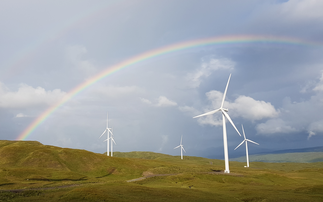
Wind turbine

Spanish engineering firm Acciona has sold its 45 per cent stake in a China wind turbine plant, due to disagreements over the future direction of the facility ahead of an expected industry shake-out.

Part of the shareholding was acquired by Acciona's existing partner in the manufacturing venture, China Energine Industry (CEI). The company – a listed subsidiary of state-owned China Aerospace Science & Technology Corporation – took a five per cent stake, raising its holding in the operation to 50 per cent.

The rest of Acconia's stake was acquired by Hong Kong-based engineering company Chook Bo Group, which took a 40 per cent holding. The remaining 10 per cent of the operation continues to be held by Inceisa, a Spanish-Chinese joint venture that promotes economic activities between Spain and China.

Acciona told Europa Press news agency last week that the move was prompted by differences on strategy with its Chinese partner and a China market that is primarily focused on developing domestic companies.

Acciona did not disclose the sale price. However, CEI, in an announcement to the Hong Kong Stock Exchange last month, said that it had paid 2.76m yuan ($400,000) for the five per cent shareholding, putting the potential total cost of Acciona's 45 per cent stake at about $3.6m (£2.3m).

The plant, located in the industrial city of Nantong in eastern Jiangsu Province, was established at a cost of $31m in 2006. At the time, Acciona claimed that it was China's largest wind turbine manufacturing facility and the first to be part-owned by a Spanish company.

CEI said in the stock exchange disclosure that the joint venture, Nantong Acciona, "suffered from intense competition in the domestic wind turbine market and sluggish progress made on [the] domestic production of wind turbine[s]".

CEI added that it will now conduct independent research and development to produce wind turbines using its own technology.

Acciona's action comes as China's wind turbine industry is expected to consolidate. Fewer than 10 out of more than 100 manufacturers are likely to survive, according to Hu Yueming, chairman of Nanjing-based China High Speed Transmission Equipment Group, a company that supplies transmission gears to about 13 turbine makers, which collectively account for 98 per cent of China's market supply.

Hu told the South China Morning Post last month that "even 10 may be too many for China", where he believes there is overcapacity in turbine production, but not in the transmission gears segment, which is served by only a few companies.

Acciona appears to be willing to wait out the impending storm of consolidation. The company said it plans to retain a presence in China to service the 250MW of total turbine capacity it sold locally and to maintain industrial relations with producers in the country.

WHAT DO YOU THINK? Add your comment


Greg Barker has said that despite cuts to solar incentives the industry will continue to grow this year - is he right?

2%

5%

8%

85%

INSIGHT

Submit your email address and we'll send a link to a personal newsletter control panel


Mechanical Integrity Engineer

09 Feb 2012

Mechanical Integrity Engineer, 35,000-45,000, Midlands A global power organization are looking to identify a Mechanical Integrity Engineer to become part of a globally accalimed engineer department. Delivering R&D Projects in relation to the business' GAS and Steam Turbine operations - the role will challenge the engineers mechanical design capabilities and integrity of company products. The succe

APC

Guidelines for specification of data centre power density

The science and practical application of an improved method for the specification of power and cooling infrastructure for data centres

Quocirca

Powering the data centre

A look at alternative approaches to managing energy for cost and/or sustainability reasons in data centres