09 Jul 2009
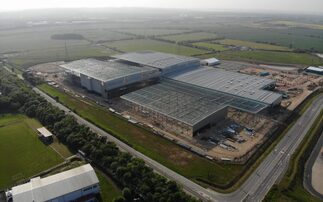
Australian green groups have stepped up calls for a $780m (£482m) desalination facility planned for Western Australia to be powered using renewable energy.
The project, to be located in Binningup, south of the state capital Perth, received federal government approval last month. It must comply with strict regulations to preserve the surrounding habitat and preserve wildlife in the area. However, green groups are now calling for the project to be extended to include renewable energy technologies capable of supplying the plant with zero-carbon power.
WA Conservation Council director Piers Verstegen said the facility should be able to access local solar, wind and geothermal energy sources. "The opportunity is there to make sure that [it] is genuinely powered by renewable energy so we don't see another major spike in carbon emissions resulting from our water supply system," he told broadcaster ABC News.
Francis Logan, Western Australia's minister for science and innovation and member of the opposition Labor party, has also said he is in favour of having the plant entirely powered by green energy.
Logan noted that although the ruling Liberal government has committed to tapping clean energy sources for the facility, it has not specified whether renewable power would be a supplementary or sole source of electricity.
Construction on the desalination plant is slated to start later this year. It will increase Western Australia's water supply by nearly 20 per cent upon completion in 2011.
In related news, South Australia has released a $10bn state-wide plan, Water for Good, that calls for a comprehensive course of action to desalinate and recycle stormwater. It sets out a strategy to diversify the drought-stricken state's water supply and guarantee water security until at least 2050.
In the report, launched late last month, the state government estimates that up to 75 billion litres of stormwater could be recycled annually in South Australia.
Feasibility studies by consultants have found that the state's urban areas could capture 60 billion litres of stormwater per year over the long term, while outlying regions could provide 15 billion litres.
In the near term, stormwater capture facilities that are in operation, under construction or being planned would provide about 20 billion litres annually by 2013. Capital expenditure of $548m would be needed for projects that would supply 42 billion litres.
Funds would also be spent on pipeline networks, irrigation systems, water licences that entitle holders to a share of water, and the management of river wetlands and flood plains.
South Australia is suffering from the effects of a long-running drought. The Murray River system, which is the largest in Australia and the main source of drinking water for the state capital, Adelaide, is in danger of running dry in the next two years.
The government plans to use the Water for Good report as a starting point for the establishment of a Water Industry and Planning Act, which it hopes to propose to state parliament in 2010.
LATEST STORIES ABOUT FACILITIES
YOU MAY ALSO LIKE
LATEST JOBS
TODAY'S TOP STORIES
HIGHLIGHT
Remit of new Energy Efficiency Deployment Office to include transport and industry as well as buildings
INSIGHT
INSIGHT
The science and practical application of an improved method for the specification of power and cooling infrastructure for data centres
A look at alternative approaches to managing energy for cost and/or sustainability reasons in data centres
WHAT DO YOU THINK? Add your comment