General Motors to lay grid groundwork for plug-in hybrids

Auto giant set to partner with electricity firms to maximise power for its electric vehicle

By Danny Bradbury

23 Jul 2008

Be the first to comment

GM Volt

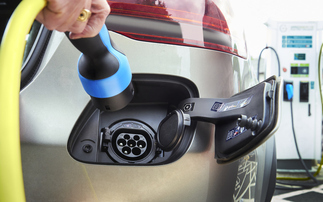
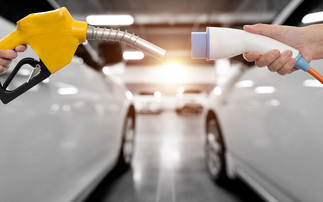
General Motors (GM) has revealed it is partnering with electric vehicle research organisations and utilities to prepare the electrical infrastructure for the introduction of its Volt plug-in electric hybrid.

The company, which announced the initiative at the Plug-In 2008 conference in California this week, said it has signed 34 utilities to the scheme, along with the Electric Power Research Institute (EPRI), to ensure that utility metering options support vehicle charging without penalising customers.

"We're sitting down to ensure that the vehicles they are building and the utility grid are ready for each other," said Mark Duvall, programme manager for electric transportation at EPRI. "It's about getting the technology on the vehicle right. The utilities are making tremendous investments in smart metering that they are rolling out to their customers, and the vehicles have to talk to the smart metering technology."

The scheme focuses on the implications for overall load on the grid in addition to electricity costs for the customer, said Duvall, adding that one plug-in hybrid electric vehicle (PHEV) equalled roughly four plasma screen TVs in electricity terms. "The near-term challenge for utilities will be in distribution networks," he said. "Every utility has an inventory of distribution systems, and some of their substations are fully burdened."

Realistically, the rollout of PHEVs is unlikely to cause any load problems for utilities in the mid-term. Research from Frost & Sullivan suggests that the US will have roughly 140,000 PHEVs on the road by 2015. At an average energy capacity of 15KW/hr per vehicle, that suggests a daily energy draw of 2.1Gw/hr, assuming all vehicles are subjected to a deep cycle charge. That equates to the daily energy consumption of about 68,600 average US households or less than 0.01 per cent of all US homes. But should PHEVs rapidly enter the mainstream, the grid is likely to come under more pressure.

Duvall moved to distance the programme from Google’s vehicle to grid initiative, which focuses more on using electric vehicles for energy storage that could be delivered back to the grid to assist with demand management. " These are interesting topics but they’re not as critical in terms of integrating the vehicles," he concluded.

WHAT DO YOU THINK? Add your comment


Greg Barker has said that despite cuts to solar incentives the industry will continue to grow this year - is he right?

2%

6%

7%

85%

INSIGHT

Submit your email address and we'll send a link to a personal newsletter control panel


Mechanical Integrity Engineer

09 Feb 2012

Mechanical Integrity Engineer, 35,000-45,000, Midlands A global power organization are looking to identify a Mechanical Integrity Engineer to become part of a globally accalimed engineer department. Delivering R&D Projects in relation to the business' GAS and Steam Turbine operations - the role will challenge the engineers mechanical design capabilities and integrity of company products. The succe

APC

Guidelines for specification of data centre power density

The science and practical application of an improved method for the specification of power and cooling infrastructure for data centres

Quocirca

Powering the data centre

A look at alternative approaches to managing energy for cost and/or sustainability reasons in data centres