05 Nov 2009
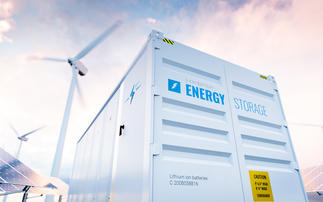
French oil company Total has signed a $4 million, five-year research deal with the Massachusetts Institute of Technology to develop stationary batteries capable of storing solar power.
The arrangement will come under the auspices of the MIT Energy Initiative, which Total joined in November 2008, and the aim is to build low-cost, long-life batteries that can store energy generated by solar panels.
Storing renewable energy generated by solar panels and wind turbines reliably and cost-effectively has been a major challenge to date and the lack of commercially available storage technologies has so far acted as an inhibitor to the widespread deployment of renewable energy technologies.
Ernest Moniz, director of the MIT Energy Initiative programme, said that Total's support fot the project had the potential to be "a game-changer" in the development of mainstream battery technologies.
The announcement comes as another MIT researcher, Professor Daniel Nocera, recently published a report detailing how a new approach to battery chemistry that promises to significantly improve the efficiency of small scale energy storage devices for use with personalized or micro-generation-based solar power.
The report, Chemistry of Personalized Solar Energy, was published in the American Chemical Society's journal, Inorganic Chemistry, and argued that most current methods of solar energy storage, including batteries, are limited by low-energy densities - in a typical battery's case just -0.1-0.5MJ per kg. It added that as a result, most research in battery development terms today is focusing on optimising power density – the rate at which a charge can flow in and out of a battery – instead.
But Nocera is trying to get around the energy density problem by building a system based on liquid fuels, which have a density of -50Mj/kg - as much as 100 times larger than current solar storage methods.
His system is based on an oxygen-evolving catalyst that splits water molecules into oxygen and hydrogen using a process similar to photosynthesis. The molecules then act as the fuel for producing electricity in a fuel cell.
LATEST STORIES ABOUT TECHNOLOGY
YOU MAY ALSO LIKE
LATEST JOBS
TODAY'S TOP STORIES
HIGHLIGHT
The best green companies in the UK should be preparing their entries for annual BusinessGreen Leaders Awards
INSIGHT
INSIGHT
The science and practical application of an improved method for the specification of power and cooling infrastructure for data centres
A look at alternative approaches to managing energy for cost and/or sustainability reasons in data centres
WHAT DO YOU THINK? Add your comment