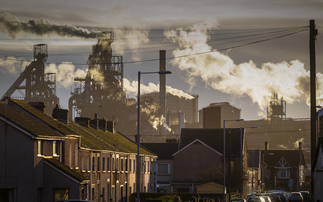
Enerkem claims world first with giant waste-to-fuel plant

Canadian firm says new Edmonton plant will process 100,000 tonnes of waste year, creating enough fuel for 400,000 cars

By Rachel Fielding

02 Sep 2010

Be the first to comment

Enerkem waste-to-fuel plant plan

Canadian biofuel specialist Enerkem this week announced it has begun construction on what it claims will be the world's first industrial-sized plant capable of converting non-recyclable municipal waste into advanced biofuels.

The plant, in Edmonton, can produce 10 million gallons of five per cent ethanol-petrol blend biofuel a year, providing enough fuel for 400,000 cars while also helping to meet renewable fuel standards set by the Canadian federal government and the province of Alberta.

The facility will also convert 100,000 tonnes of municipal waste into fuel each year, making a major contribution to Edmonton's target of diverting 90 per cent of residential waste from landfill by 2013.

The city currently diverts 60 per cent of its waste from landfill, largely thanks to its recycling efforts, but the figure is expected to approach 90 per cent when the Enerkem plant becomes operational next year.

Mayor Stephen Mandel said the plant would help establish Edmonton as the first major city in North America to see 90 per cent of residential waste diverted from landfill.

Enerkem says that even materials not suitable for traditional recycling contain carbon molecules that can be chemically recycled, although some pre-sorting is required.

After extraction, the carbon residues are converted into transportation fuel and other useful chemicals using a combination of heat, pressure and chemical catalysts. Water and inert materials are also produced during the process, with the byproducts typically used to make construction aggregate.

Currently, 64 per cent of municipal waste in the US ends up in landfill and Enerkem is targeting expansion across North America. The company already has plans in place to open another plant with a similar capacity to the Edmonton facility in Pontotoc, Mississippi, which it expects to be operational by 2013.

The announcement comes during a busy week for the advanced biofuel sector, after Canadian organic food processor SunOpta Inc announced it has sold its SunOpta BioProcess unit to second-generation biofuel specialist Mascoma Corp for $51m (£33.2m).

Mascoma said the deal will combine SunOpta BioProcess' fibre treatment and pre-processing technologies with its processing technologies, creating an enlarged company with comprehensive capabilities for converting non-food biomass into ethanol.

Meanwhile, Australian algae biofuel specialist Algae Tec said it is undertaking an initial public offering that is expected to close on 16 September, providing the company with a listing on the Australian Securities Exchange. The company hopes to raise AUS$7.5m (£4.4m), according to reports in the Sydney Morning Herald.

Algae Tec, which recently secured the exclusive global rights to the McConchie-Stroud algae growth and harvesting system, also announced two non-binding agreements to deploy its technology in China and Australia.

It said the photobioreactors at the heart of its algae production technology can generate a number of revenue streams from oils that can be refined into biodiesel, sugars that can produce ethanol, and proteins that can be used as feedstock or combined with sugars as biomass to produce jet fuel.

WHAT DO YOU THINK? Add your comment


As campaigners again write to Nick Clegg demanding action on mandatory carbon reporting rules, would your business like to see standardised rules enacted?

75%

16%

9%

NEWSLETTER

Information currently unavailable.
bg-cit2

Smart working in the 21st century

This new handbook explores practices that allow organisations to overcome their technological limitations and traditional office-culture challenges - freeing employees to do more with less from wherever they want to.

RISO

Colour printing: a licence to waste

The centralised printers used in many businesses are wasteful, unreliable and expensive to run - just as their suppliers intend