Green Building Council promises open source sustainability code

Proposed guidelines for green non-domestic buildings to help firms compare rival standards

By James Murray

14 Jul 2008

Be the first to comment

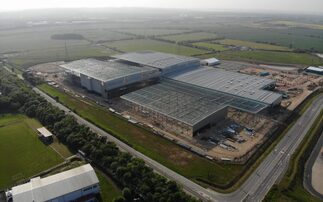
building site

The UK's Green Building Council (GBC) has today announced plans to help address the confusion arising from the myriad of different green building standards through a new Code for Sustainable Buildings, designed to underpin various consultancies and standard bodies own green building guidelines.

The GBC is to launch a new taskforce involving representatives from a number of construction firms and other organisations that will work to develop the building guidelines required to help the industry meet the government's target of ensuring all new non-domestic buildings are "zero carbon" by 2019.

The final code, which is scheduled to be published in March next year, is expected to mirror the government's Code for Sustainable Homes and as such, will feature wide-ranging rules and guidelines on the metrics and best practices builders should embrace to limit the environmental impact of offices, commercial properties and other non-domestic buildings.

The GBC's John Alker said that the new code would "go beyond" carbon, and address best practices for curbing water use, waste generation and impacts on biodiversity.

He added that the new code would be fully open source, allowing various standard bodies, building firms and consultancies to use elements of the code in their own green building guidelines.

"We expect the code to have core outcomes that could be used in other sets of guidelines," he said. "For example, metrics such as CO2 or energy per metre squared could be used in various green building rating tools."

This open source approach aims to help firms to better compare the various green building standards currently available. "Multinational firms are coming to us and asking 'what is the equivalent in the UK to the LEED platinum [US green building] standard?'" he explained. "Having an open source code underpinning different tools means green building service providers would be able to offer competing toolsets, but whichever front end a business chooses they know that it is underpinned by the same principles."

The announcement comes just days after the Carbon Trust launched a new guide for helping firms reduce carbon emissions through building refurbishment.

The government-backed company said that with 60 per cent of the buildings that will be standing in 2050 already built, low-carbon refurbishment of the existing building stock will have to form a central plank of government efforts to meet carbon reduction targets. However, it warned that measures for curbing energy use are often ignored during refurbishment project and consequently many refurbishments result in an increase in carbon emissions.

The new guide outlines the best practices firms should adhere to when undertaking refurbishment projects, including the setting out of carbon reduction targets, the undertaking of whole life cost assessments for the project to highlight the long term cost savings that can be achieved through investments in energy saving measures, and the appointment of a "carbon champion " to oversee such projects.

WHAT DO YOU THINK? Add your comment


Greg Barker has said that despite cuts to solar incentives the industry will continue to grow this year - is he right?

7%

6%

8%

79%

INSIGHT

Submit your email address and we'll send a link to a personal newsletter control panel


Mechanical Integrity Engineer

09 Feb 2012

Mechanical Integrity Engineer, 35,000-45,000, Midlands A global power organization are looking to identify a Mechanical Integrity Engineer to become part of a globally accalimed engineer department. Delivering R&D Projects in relation to the business' GAS and Steam Turbine operations - the role will challenge the engineers mechanical design capabilities and integrity of company products. The succe

APC

Guidelines for specification of data centre power density

The science and practical application of an improved method for the specification of power and cooling infrastructure for data centres

Quocirca

Powering the data centre

A look at alternative approaches to managing energy for cost and/or sustainability reasons in data centres