Businesses must stop whinging and tackle the green skills crisis head on

12 Mar 2010, 11:05

Few debates cast the UK's business and political community in such an unedifying light as the never-ending row over skills.

On one side you have those entrepreneurs and business leaders who lament the educational state of school leavers, while either happily embracing tax avoidance measures (I'm looking at you Sir Philip Green) or offering nothing but the most negligible health and safety training to staff paid minimum wages before then complaining they are not up to the job.

On the other you have successive governments that have hymned the importance of the knowledge economy, but then singularly failed to tackle the decline in the science, maths and engineering graduates needed to drive it.

Actually, that characterisation is slightly unfair on the government.

Its efforts to make science sexy may have proved both embarrassing and ineffective in terms of the number of school leavers and graduates specialising in technical subjects. But as this week's report from the Royal Society revealed a silent revolution has been enacted at the business end of the knowledge economy over the past decade.

The study confirmed Britain's public spending on science has doubled in real terms since 2000 to over £6bn, while patents granted to UK universities have more than doubled. Moreover, university spin outs now employ around 14,000 people and generate revenue of £1.1bn - the old myth that the UK is good at science but bad at commercialisation is looking increasingly outdate.

If anyone is letting the side down in the battle to build a high-skilled knowledge economy it is businesses. The report found that in 2007 British companies spent 1.14 per cent of GDP on R&D, while the US committed 1.9 per cent of GDP to research and Germany invested 1.8 per cent.

Meanwhile, those firms that year after year bemoan falling exam standards and illiterate school leavers look more and more like the boy who cried wolf - warning that a crisis is brewing as a result of the government's flawed education policies but then struggling to provide solid evidence of how that crisis is genuinely impacting their competitiveness.

There are, as Tesco's director of corporate and legal affairs Lucy Neville-Rolfe observed this week some school-leavers who "seem to think that the world owes them a living". But to suggest that feckless young people are unique to this generation or that the situation was somehow better in the mythical Good Old Days is absurd. No one is arguing our education system is perfect, but nor is it the catastrophe of tabloid and boardroom myth.

However, the problem, as anyone who knows the fable about the boy who cried wolf is aware, is that eventually a crisis does materialise - and the indications are that if the skills crisis will hit anywhere it will hit the emerging low carbon economy.

Tens of thousands of new green jobs will be created over the next decade in a wide variety of industries, and while some of them will be relatively low skilled many will require significant levels of training. Renewable energy firms are already reporting that they are finding it difficult to fill posts for technicians and engineers and the situation is only likely to worsen.

There may be little evidence as yet that skills shortages alone are delaying low carbon projects, but as this week's Institution of Mechanical Engineers' report on the UK's nuclear energy plans noted the risk is very real. The report reckons each of the planned 10 new nuclear power plants that are scheduled to be built by 2025 will need around 10,000 staff including 1,000 highly specialised nuclear engineers.

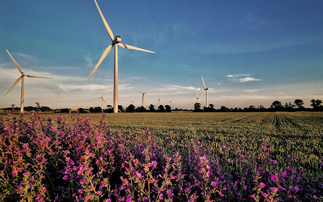
Similarly, a report commissioned by the wind energy industry last year revealed that employment across the sector could grow ten fold over the next decade from 5,000 jobs currently to 50,000 by 2020. The government is more optimistic still predicting that the next wave of Round Three offshore wind farms alone will support 60,000 jobs. It goes without saying that not many potential employees come straight out of school with the knowledge of how to calculate load factors on a 100 metre tall wind turbine operating in a force five gale, or the ability to direct a maintenance vessel between turbines whiole coping with ten foot tall waves.

The fact is that should the UK finally sort out the planning restrictions and financial issues that have hampered the development of low carbon projects, as looks increasingly likely to happen, the likelihood is it will walk straight into a skills crisis.

It would be great if the government could wave a magic wand and deliver the skilled graduates the industry will need, but that is not the way it works. It will take years to significantly improve the numbers of technologically-minded graduates entering the workforce each year, particularly given that the scale of the budget deficit means the UK will be very lucky if investment in education and skills programmes is even retained at current levels.

You can argue all you like about the rights and wrongs of this scenario and even add it to the long list of reasons to resent the bankers if you want, but it will not change anything and as a result green businesses are going to have roll their sleeves up and tackle the skills crisis themselves.

That means long term planning to identify where skills gaps could develop, significant and sustained investment in training, and orchestrated campaigns to promote the emerging clean tech industries to students and even school kids.

It might be tempting to simply stand by and argue the government should serve up the correct workforce on a plate each year, but those green firms that take such a passive approach will be amongst the first to suffer if a skills crisis materialises. Meanwhile, just as with any other climate change strategy, those firms that identify the risks and plan for the long term will reap the rewards in the end.


ADD YOUR COMMENT

WHAT DO YOU THINK?

ABOUT JAMES' BLOG

Previously known as the BusinessGreen Blog, James' Blog features musings, observations and occasional rants from BusinessGreen editor James Murray

Browse posts by date

Cal_navigation_previousMay 2012Cal_navigation_next
MonTueWedThuFriSatSun
       
123456
       
7810111213
       
141617181920
       
21222324252627
       
28293031