"Garbage does not exist in nature"

From pot plants to pencil cases, chief executive of TerraCycle Tom Szaky explains how the "up-cycling" firm plans to become the world's largest waste company

By James Murray

07 Sep 2009

Be the first to comment

Kenco wallet

BusinessGreen.com: How did TerraCycle get started?

Tom Szaky: It all started when some friends in Toronto were trying to grow pot in their basement and they were having problems getting it right. They eventually hit upon feeding the plants food waste that had been processed by worms – and it worked. That started me thinking about garbage for the first time and the fact that garbage does not exist in nature, in fact the whole concept of waste is a false paradigm. Garbage should have a value. From there we started the business by collecting organic waste and feeding it to worms, which then created fertiliser. We liquidised the fertiliser, turning it into plant food for people's gardens, and then packaged it in used soda bottles.

How would you describe the TerraCycle business model?

The way to solve the waste issue is to target collection and recycling. With collection, our model is to partner with major consumer companies – we partnered with Kraft Foods first and now have 30 other partners in the US, including Mars, Frito Lay, Unilever and P&G. We work with those companies to set up consumer recycling brigades.

How do these brigades work? How do they differ from conventional recycling collection?
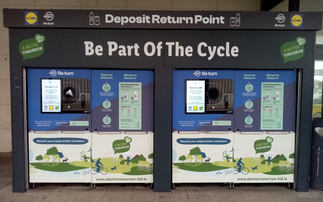
Take Tetrapak as an example. It is completely recyclable packaging, but the problem is that recycling centres are not available everywhere to justify the expense of organised collections. We solve that by asking consumers to sign up and set up their own collection site. We give them a box to fill and a free shipping bill to send the material to the recycling centre. The brand then gives a donation to the charity of the consumers' choice to encourage participation.

On the recycling side, you have described your approach as " up-cycling". What do you mean by that?

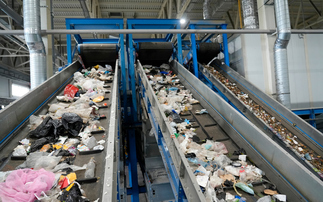
If you look at consumer products, everything ends up as waste very quickly. According to one study, 99 per cent of what you buy each day ends up as waste within six months. Recycling has been presented as the answer to this problem, but 80 per cent of the packaging that comes with consumer products are hybrids containing two or more materials. They are either not recyclable or are very hard to recycle.

Up-cycling means that you don't destroy any of the waste, you use it to make a new product. We attribute 100 per cent value to garbage; in fact there is no garbage, it is all material that can be used. For example, the Tassimo cartridges we have just started collecting in the UK will be separated so that the coffee waste goes to compost, the plastic and aluminium is recycled and the wrappers will be used to make notebooks, bags and so on. Nothing ends up in landfill.

We get free raw materials that we use to manufacture more than 300 products that we can sell. We are partnered with all the big retail giants, such as Wal-Mart and Target, which sell the resulting products. US sales of up-cycled products should hit $10m (£6m) this year and we expect them to reach $50m next year.

That is huge growth. How do you plan to achieve it?

We have started to partner with manufacturers and we now give them the materials to create a TerraCycle product. It is like the Disney licensing model, where partners actually make the products. That is how we expect to deliver such a big jump next year from $10m to $50m in revenue, as we have moved from self manufacturing to licensing. We are in the top 300 fastest-growing private firms in the US.

How sustainable is that level of growth – can you secure the waste materials you need to produce new product at that scale?

One of the reasons we have just moved into the UK is that surveys consistently show that it has one of the most concerned populations when it comes to sustainability. Surveys of US citizens show that the population is no more than middle of the road in terms of its concern for the environment, but we still have about 400 organisations, such as schools and offices, each with access to an average of 200 people, signing up to become a collection centre each day. We now have six million people in the US as part of our collection network, which shows that this model is scaleable. We want 15 million to 17 million in the US.

What are your plans for the company in the UK?

We are initially focusing on homes and offices as we have started collecting coffee products, but we expect schools and other groups to come on board as we sign up new consumer brands. In the US we work with 40 waste streams. In the UK at the moment we have three, but we envisage getting up to 40 within two years. We will announce new brands that we are partnering with in the UK over the next six months and we are also looking to launch with Kraft in Canada and Mexico. The long-term goal is to become the ultimate solution for garbage globally. We are starting on that journey by investigating trialling home collection of the waste. You need to reach a scale where you can justify the cost of the collection, but if we reach that point, it could be feasible.

Does this approach really deliver significant environmental benefits? There must be a significant carbon footprint associated with the manufacture of new TerraCycle products and the shipping of re-usable materials.

We commissioned an independent study on our up-cycling approach and found that our pencil case made from re-used juice pouches uses 85 per cent less carbon than any other pencil case. People have said we are shipping materials all around the country, but shipping is a small proportion of a product's carbon footprint compared to the extraction of raw materials required for any new product. We also offset all emissions associated with our shipping activities. It is better to try and re-use or recycle materials in almost all circumstances. With any metal it takes 95 per cent less energy to recycle than to extract new metals from the earth. With glass recycling it is 50 per cent more efficient. With paper it's a bit tighter, but when you add in the carbon impact of cutting down the tree, recycling is more efficient.

WHAT DO YOU THINK? Add your comment


Greg Barker has said that despite cuts to solar incentives the industry will continue to grow this year - is he right?

5%

6%

7%

82%

INSIGHT

Submit your email address and we'll send a link to a personal newsletter control panel


Mechanical Integrity Engineer

09 Feb 2012

Mechanical Integrity Engineer, 35,000-45,000, Midlands A global power organization are looking to identify a Mechanical Integrity Engineer to become part of a globally accalimed engineer department. Delivering R&D Projects in relation to the business' GAS and Steam Turbine operations - the role will challenge the engineers mechanical design capabilities and integrity of company products. The succe

APC

Guidelines for specification of data centre power density

The science and practical application of an improved method for the specification of power and cooling infrastructure for data centres

Quocirca

Powering the data centre

A look at alternative approaches to managing energy for cost and/or sustainability reasons in data centres