Airports check in with green innovations

The aviation industry in its current guise may never be compatible with a low-carbon economy, but as Amy Sims discovers, airports are trying to do their bit to cut carbon footprints

By Amy Sims

11 Nov 2008

Be the first to comment

Heathrow Terminal 5

Aviation has long been public enemy number one in the fight against climate change, and it's a title the industry has showed few signs of being able to shrug off.

Even the most optimistic observers accept that low or even zero carbon flight is at best decades away and while attempts to enhance fuel efficiency and cut carbon emissions by operating newer fleets or flying slower are welcome they are never going to deliver the deep cuts climate scientist claim are required.

Faced with this reality, the aviation industry is seeking to combine investment in new flight technologies such as biofuels with a focus on cutting emissions from the one area they can deliver deep short-term savings – airports.

At a number of flagship airports around the world, airport operators are seeking to reduce their environmental impact, whether by installing thousands of solar panels or using the grounds from your pre-flight latte to enhance the landscape.

New-build terminals today are often designed with sustainability in mind from the offset. Whilst Heathrow’s Terminal 5 got off to such a dismal start that the biggest boast they can make half a year in is that it's now "working", the building features a long queue of green features.

According to airport operator BAA, Terminal 5's water capture systems mean that 85 per cent of the rainwater that hits Terminal 5 is utilised for non-potable purposes, such as flushing toilets and reducing demand on the mains system by 70 per cent. Similarly, 85 per cent of the terminal's heat is supplied by the excess heat produced from the Heathrow heat and power station that is piped through an underground tunnel to the building, while 30,000 native woodland plants and 4,000 trees and shrubs are being planted around the terminal.

BAA also vows to help passengers reach the airport by more environmentally-friendly forms of transport and has provided free bicycle parking of all things.

Let the daylight in

However, it is in cutting their energy use that airport terminals can often deliver the deepest cuts in emissions.

Like the new terminal at Singapore Airport, Heathrow Terminal 5 features glazed walls and a roof designed to let in natural light and cut down on the use of artificial lighting, while Boston Logan Airport's new Terminal A has installed a heat-reflecting roof and windows and is the world’s first airport terminal to be LEED (Leadership in Energy and Environmental Design) certified by the Green Building Council. The terminal is estimated to have saved the operators almost $300,000 in electric bills and 1.7 million gallons of water a year through a raft of innovations, such as low-flow faucets and waterless urinals, self-dimming lights, and storm water filtration systems.

Scorching hot days and ample snowfall are not extremes experienced often in the UK but transport ministers in Japan are hoping to keep airport visitors cool via condensation. They have announced plans to provide up to 30 per cent of the cooling required at a major airport during the summer months using snow stockpiled in the winter. If all goes as planned, starting in 2010 snow will be used to chill the liquid used in the New Chitose Airport's cooling system, which could equate to carbon dioxide savings of up to 2,100 tonnes, according to government officials.

Solar-powered airports

One advantage airports have over other buildings looking to cut carbon emissions is that by definition they tend to be surrounded by a lot of open space, giving them the potential to install relatively large-scale renewable energy plants.

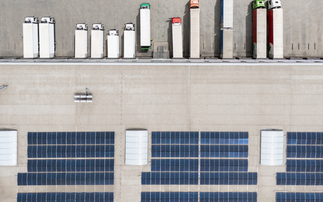
For example, solar panels installed recently near the runways of Fresno Yosemite International in California are expected to provide electricity to power 40 per cent of the lighting, air-conditioning, controls and tower communications at the airport. The airport said the solar array will be 9.5 acres in size and is expected to save it $13m over the next 20 years.

In the UK, BAA has also said that thanks in part to a grant from DEFRA, the proposed terminal extension at Stansted airport will be "carbon neutral following the installation of a state-of-the-art biomass heating boiler, one of the biggest ever seen in commercial use in the UK".

As well as helping to put a polish on airport's rather tarnished reputation, such initiatives will also help them comply with forthcoming carbon legislation, such as the UK's climate change bill and its target to reduce emissions by 2050.

A spokesman for the UK Green Buildings Council said that while there is no specific environmental legislation targeting airport terminals, 18 per cent of the UK's total emissions come from energy used in non-domestic buildings and, just like other commercial properties, airports can expect to face increased legislative pressure to curb their carbon footprint.

Cutting the waste, one cup at a time

As huge generators of waste, airports are also increasingly avid proponents of waste reduction initiatives.

One airport with an innovative approach to the problem of waste is Seattle-Tacoma Airport which has inked a deal with a local composting company to mix used coffee grounds from its 55 coffee outlets with lawn cuttings and yard waste from homes in the city. Completing the recycling loop, the airport then buys the resulting compost back for use in its landscaping and to help keep dust levels down between the runways.

Recycling bins have also become a common feature at airports around the world as operators seek to promote their green credentials to travellers and, while airports' environmental efforts may do little to offset the wider aviation industry's giant carbon footprint, they demonstrate that the sector is not without its green conscience.

WHAT DO YOU THINK? Add your comment


Greg Barker has said that despite cuts to solar incentives the industry will continue to grow this year - is he right?

8%

7%

9%

76%

INSIGHT

Submit your email address and we'll send a link to a personal newsletter control panel


Hardware Engineer / Electroni

10 Feb 2012

Hardware Engineer FPGA,VHDL,Embedded C,PCB Layout,Orcad My client a leading design and manufacturing company is looking for an experienced hardware engineer, electronic engineer. This forward thinking organisation will create ample opportunities for the right Hardware electronics engineer. The Hardware Engineer will design, implement, evaluate and verify complete data acquisition systems and the s

APC

Guidelines for specification of data centre power density

The science and practical application of an improved method for the specification of power and cooling infrastructure for data centres

Quocirca

Powering the data centre

A look at alternative approaches to managing energy for cost and/or sustainability reasons in data centres