If this page does not print out automatically, select Print from the File menu.

Could forestry help meet the UK's green energy needs?

Wood-fired power stations might not be as fashionable as wind or solar energy, but according to Bernard Fairman of investment firm Foresight Group they have a key role to play in meeting renewables targets and could revitalise the UK's forestry sector

James Murray, BusinessGreen 05 Feb 2008

BusinessGreen: Foresight Group recently invested in a waste wood-to-energy firm called O-Gen. What was the thinking behind the deal?
Bernard Fairman: Waste wood generates 10m tonnes of landfill a year, which is screamingly obviously ridiculous. This is also an area where the government has unlevelled the playing field with incentives such as ROCs [Renewable Obligation Certificates, which green energy generators can sell to create an additional source of income]. If you are building a gasification wood to energy plant, you'll probably get double ROCs for the project, tripling your returns.

What does the deal entail?
Foresight has committed £3 million as part of a £10 million fund raising which will enable O-Gen to build its first plant in Stoke and accelerate plans to start building a further four plants this year. Given the turbo charging from government it is an extremely investor-friendly sector. In addition to O-Gen and a plastics recycling firm called Closed Loop we recently invested in, we are looking to do three more deals by the end of March in the waste-to-energy sphere from our new £22m sustainable investment fund. Then, from Easter, we're looking to raise £100m in equity to support a further £400m in debt to invest in scaling up these firms further.

How do such wood-to-energy plants work?
You heat the wood to 1,000 degrees in a furnace which results in the generation of very hot gasses, which you then use to drive a steam turbine. It is a pretty simple, low-risk technology.

How would these plants fit into the national energy infrastructure?
The vision has to be one of distributed generation. It is neither green nor efficient to produce power 100 miles away and transmit it to where it is used, because you will lose 50 per cent of the energy in the transmission. If you gassify waste from your town at a local power plant you slash the grid energy losses and slash emissions associated with waste being shipped round the country. Realistically, biomass could account for five to 10 per cent of the electricity mix within 10 years.

Where could these plants be located?
With waste wood-to-energy the economics go bad quite quickly if you have to haul the waste more than 50 miles. Ideally you want it within 10 miles and you want a site with a good grid connection. Industrial parks are ideal as they tend to have good transport links and heavy duty grid connections. You also need a long term supply of wood.

Can you guarantee that supply?
Like I said there is currently the ridiculous scenario of 10m tonnes a year of waste wood going straight to landfill. But it is also worth observing that the Forest of Dean was planted to provide timber for the Royal Navy fleet and it's certainly not needed for that anymore. I'm categorically not suggesting we cut down the Forest of Dean, but there are areas of forest in the UK that used to be managed to provide a constant source of timber for the paper industry, the bulk of which has now moved overseas. Generating demand for timber to generate energy could help revitalise the UK forestry sector.

Does it make economic sense to grow trees just to burn them for energy?
If we are talking about planting crops to generate energy this approach makes much more sense than biofuels, which it has been shown to be the cause of both environmental problems and climbing food prices. Ultimately, no one has started eating wood yet. Initially companies in this sector will focus on working with pallet firms and skip operators to supply waste wood, but there is no reason fresh timber could not be used in the long run.

How much interest are you seeing in this concept?
It'll take off in the next twelve months and will be as big as biofuels. I know of 15 or so good quality investment management teams that are looking at waste wood-to-energy projects. If you can get a plant to co-locate on a site with a pallet manufacturer or can strike a deal with a local authority to provide waste wood then you have a really strong business model: the price of electricity is rising faster than inflation, the figure I've seen is seven per cent a year for the next few years; the ROCs seem to be guaranteed for a long time now; and the gate fees you can charge to take waste off people will just fluctuate based on supply and demand.

What has suddenly made this technology viable?
It wouldn't have happened without the landfill tax. If you can dump the waste for nothing, why pay someone to take it away. The gate fee further strengthens the business model, as you get that as well as the price of the electricity you generate and the ROCs [renewable obligation certificates]. It is early days for the biomass sector, but it is right up there with the solar and wind sectors, and in the long term it'll be biomass and solar that will provide the bulk of our renewable energy with wind a distant third.

Why do you think wind will fall by the wayside? It certainly seems to be the sector attracting the most interest from government at the moment.
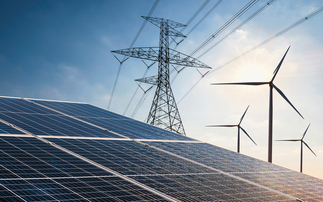
When you look at the government's obsession with wind, you have to ask are you really going to put the base load of UK energy on wind? Because if so, you need to get used to blackouts. Not only is PV four times more reliable, but when you look at the grid it is better set up to support solar. People tend to go on holiday to sunny places on holiday which creates high peaks in energy demand that require good grid connections that could be relatively easily upgraded to support solar farms. In contrast, when you look at the UK the best wind is in the north of Scotland, which has the worst grid connections because few people want to live there because it is so windy.

Advocates of wind would argue it is a far more cost effective option than solar?
Wind turbines use tonnes and tonnes of concrete in their foundations, which not only means they are inherently not going to be that green it also means that the price can't go down much further because of the material costs. In contrast, photovoltaic solar cells are basically a semiconductor, which will work according to Moores Law, meaning they will get more powerful and prices will keep going down. PV will be cost competitive with fossil fuels within five years.

And what about biomass?
Biomass sits somewhere between the two. The issue with biomass is that you have got to do something with waste. There is not the same elasticity as with solar PV as you have to account for the costs of the bricks and mortar, but what makes it economical is the cost of getting rid of the waste.

About Bernard Fairman

Bernard Fairman is the founder and managing partner of Foresight Group.

He has worked in investment for over 25 years, including stints at Panmure Gordon, Edward Bates and 3i Ventures. He founded Foresight Group, formerly VCF Partners, with Peter English in 1984.

The company invests in unquoted firms that specialise in the environment, clean tech or technology. It recently raised £22m through its EIS Sustainable UK Investment Fund, which it is targeting at waste-to-energy, recycling and photovoltaic solar firms.

www.businessgreen.com/2208826
This article was printed from the BusinessGreen web site
© Incisive Media Ltd. 2008
Incisive Media Limited, Haymarket House, 28-29 Haymarket, London SW1Y 4RX, is a company registered in the United Kingdom with company registration number 04038503
Close this window to return to the website