Firms seeking to address the business risks posed by climate change were given fresh guidance last week with the launch of a new report, which presents a framework for assessing vulnerable businesses and sectors.
The report, Adapting to Climate Change: A Business Approach, from The Pew Center on Global Climate Change, sets out guidelines on how a company can assess risks posed by global warming across their operations, value chain and broader commercial operations.
The report, written by Frances Sussman, senior economist at consultancy firm ICF International and Randall Freed, vice president of ICF, argues that the business effects of climate change will vary considerably across different sectors of the economy and advises firms to be aware of how their sector will be affected.
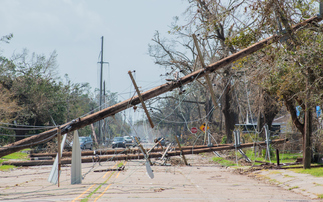
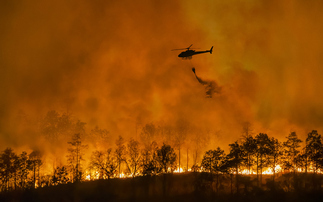
For example, the report noted that higher demand for air conditioning during prolonged heat waves could overwhelm the electricity sector. Similarly, frequent heavy rain could restrict access to construction sites leading to slow productivity in the building industry, while extreme drought could cripple the agricultural sector.
However, the report also warned that while some sectors will be affected more than others, "all businesses face the possibility of property damage and business interruption", plus possible problems with the supply of electricity, water and transport infrastructure.
The report concluded that despite these numerous threats, relatively few companies have developed global warming adaptation strategies noting that firms such as mining giant Rio Tinto, which is utilising high resolution climate modelling, to conduct detailed site assessments and gauge flood and drought risks for many of its property assets are the exception rather than the norm.
Eileen Claussen, president of the Pew Centre, stressed the importance of a long-term business strategy to adapt to unavoidable impacts of global warming and warned companies not to concentrate solely on reducing greenhouse gas emissions. "The private sector faces a range of risks and it is important that they begin now to assess their options and strategies for adapting," she said.
New study argues that hurricane damage, property losses and increased water and energy costs would wipe 3.6 per cent off US GDP 23 May 2008
1,700 scientists and economists, six Nobel Prize winners and one former prime minister urge US action on climate change 30 May 2008
US research predicts droughts and increased storm damage will lead to soaring prices, job losses and major impacts to agriculture and other industries 24 Oct 2007
New report argues financial incentives are needed alongside improved guidelines on how to limit carbon and methane emissions 13 Dec 2007
Focus on energy savings through fuel efficiency for homes and public and commercial buildings 04 Jul 2008
ActionAid accuses G8 of driving more people into poverty by pursing biofuels and cutting agri-aid 04 Jul 2008
Businesses' new found focus on the environment may be welcome, but according to Conrad MacKerron, it is taking attention away from workers' rights issues – and the credibility of the entire green business movement could be at risk 03 Jul 2008
It may be a year old, but as Dell's Jonathan Perry explains, firms looking to get rid of their old IT kit still need to pay attention to the WEEE directive 02 Jul 2008
Telling customers about your environmental targets is all well and good but, as Paul Thomas argues, they are meaningless if you do not know how they are to be achieved 01 Jul 2008