Japan hinted late last week that it could water down its ambitious goal of cutting emissions 25 per cent by 2020 if attempts to agree an international climate change deal at the forthcoming Copenhagen talks fall through.
The country drew plaudits from environmental groups last month when newly elected prime minister Yukio Hatoyama announced he was upgrading its emissions 2020 target.
However, speaking to Reuters on Friday, environment minister Sakihito Ozawa stressed that the 25 per cent target was conditional on other countries signing up to ambitious emission goals as well.
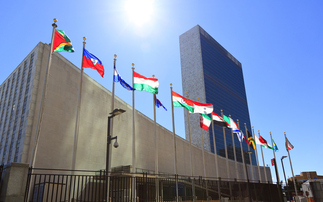
"As environment minister, I want to go ahead with this pledge, but the government announced it with a precondition at the United Nations [climate change summit last month] so of course it could change," he said.
He also warned that while the country was committed to providing funding to help developing countries roll out clean technologies and adapt to the impacts of climate change, it might not be in a position to finalise its funding plans before the Copenhagen Summit in December.
He said the government was working hard to convince Japanese businesses to support a match-making scheme that could see them agree to hand some clean technologies to emerging economies, but admitted it was a struggle to build support for the proposals.
"It would be nice to have a "matching" system under which developing countries can say they want a certain technology, while developed countries present technology they can provide, and Japan can offer its own too," Ozawa told the news agency. "But Japanese manufacturers may not be willing to provide their cutting-edge technology very easily, so it's hard to say how it will work out."
Meanwhile, Reuters also reported that it has obtained a draft copy of an EU report that commits the bloc to increasing climate funding for developing countries, but stops short of putting a figure on its contribution.
The report recognised that "the climate is changing faster than expected and the risks this poses can already be seen," and endorsed a European Commission recommendation that rich countries will need to provide €100bn (£92bn) a year of funding to poorer nations to help them cope.
It estimated that between €22bn and €50bn of that estimated €100bn would have to be provided by governments, with the rest likely to be raised through the carbon markets. It also said the EU would pay its fair share of the €100bn, but failed to provide a precise figure.
Earlier in the week, chancellor Alistair Darling said the UK was willing to provide €1bn a year under a deal that would see the EU stump up €10bn each year, the US provide a further €10bn, and other rich nations such as Japan, Canada and Australia club together to offer €10bn.
Local media claims prime minister Yukio Hatoyama will announce increased funding commitment to the Copenhagen summit on Friday 15 Dec 2009
New Japanese PM says financing to help developing nations tackle climate change is vital to any Copenhagen deal 26 Oct 2009
EU leaders agree to provide fair share of €100bn a year climate funding, but precise details remain murky 30 Oct 2009
Observers likely to be left cold, as addresses to UN fail to deliver detailed new proposals on how to break Copenhagen deadlock 22 Sep 2009
Cameron presents pre-election energy policy, promising greater investment certainty for low-carbon projects, green loans for households, and streamlining of planning system 19 Mar 2010
Joint statement from carbon exchange and Hungarian government aims to restore confidence in CER market 19 Mar 2010
From climate change contrarians to the "KitKatastrophe" of Nestle's palm oil policy, we look at the best the green web has to offer this week 19 Mar 2010
From the government's plans for a marine energy revolution to John Lewis' proposals for an off-grid supermarket 19 Mar 2010