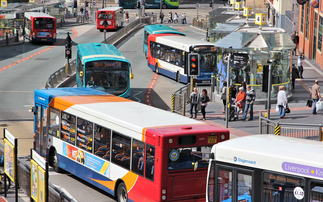
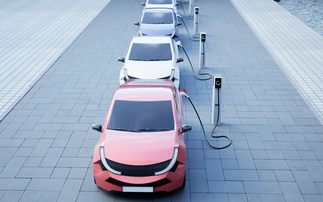
Local councils and transport planners across London are working on plans for a huge expansion of car club initiatives that could take up to 60,000 cars off the capital's roads by 2020.
Transport for London (TfL) last year provided £500,000 in funding for local authorities to help them provide parking spaces for car clubs and is to provide a further £550,000 this year as part of a programme that could ultimately see about 3,000 cars made available to car club members.
A spokeswoman for TfL said that the agency recognised car clubs – which allow members to effectively share cars, only hiring them for the time that they need them and picking them up and dropping them off from street side parking spaces – as "a very good idea".
She added that the aim was to develop a scenario where car club cars are ubiquitous with the "vast majority of Londoners within 10 minutes walk of a car ".
Paul McLoughlin, UK general manager at car club Zipcar, said that this target was achievable, noting that Zipcar, one of four car club companies operating in London, already has cars within 10 minutes of walk for 1.5 million people.
He added that the growing support for local authorities for car clubs will help overcome one of the main barriers to customer adoption and establish London as "the car club capital of the world".
"The main barrier at the moment is ensuring that the distribution of cars is dense enough that everyone can reach a car in ideally five minutes walk," he said. "The aim is to establish car clubs as a replacement for private ownership so you need convenient street side parking."
McLoughlin added that this barrier was fast being removed as growing numbers of London boroughs such as Islington, the Royal Borough of Kensington and Lambeth provide parking spaces for car clubs. Westminster recently launched a bidding process for a company to operate 100 car club cars.
In the longer term, McLoughlin admitted there were still issues to be resolved in how car clubs could best operate, with legislators yet to decide on whether car clubs should ultimately form part of the public transport network in a manner similar to Paris' Velib bicycle hire scheme; whether one operator should be given the contract for each city in which car clubs operate; or whether a number of operators should compete in each market.
However, he added that in the short term the outlook for company's such as Zipcar was upbeat with both business and domestic customers increasingly embracing the model.
"We charge £45 for 24 hours and that gets you 60 miles of fuel, insurance and the congestion charge," he said. "We are cost competitive with any hire car company, but then we only charge £4.50 for an hours use, so you only pay for what you use."
The car club model also brings with it significant environmental benefits according to Zipcar, which claims that 40 per cent of its 250,000 members worldwide either get rid of their own cars or put off a purchasing decision.
TfL says bike-hire scheme using 400 docking stations and 6,000 bicycles will launch in capital next May 28 Apr 2009
Plug-in hybrid Prius and all-electric Citroën offered as part of new Westminster car club 08 Jul 2009
Council to launch its own car club with view to undercutting privately run car-sharing schemes 27 May 2009
Engineering giant claims almost a third of its venture capital investment portfolio is focused on clean tech 10 Jul 2009
Energy giant shells out undisclosed sum for a pipeline of solar photovoltaic projects in the south of France 10 Jul 2009
From magnetic cars to rows over greenwashing, we run down the top stories from the past week 10 Jul 2009
Bill Beaver takes the microscope to the backroom deals that will shape the future of the US climate change bill 09 Jul 2009
Whenever a big story breaks about the dire straights in which the natural world finds itself, it always sparks something of a... 07 Jul 2009