They may be more famous as the Australian home of Koala Bears, but fast growing Eucalyptus could soon become a feature of the UK's forests after the government announced it was to investigate using virgin timber from the trees as a source of fuel for biomass power plants.
Defra has today unveiled plans for a three year research project to assess the feasibility of short rotation forestry as a viable renewable energy source with Eucalyptus featuring as one of the trees under consideration.
Under the plans, around £1.5m of funding will be provided to establish of " operational scale" plantations where both native and naturalised broadleaved trees along with other species can be assessed.
The forestry sector has been identified as a key component in attempts to meet the target set out in the government's renewable energy strategy of generating six per cent of the UK's electricity being provided by biomass power plants by 2020.
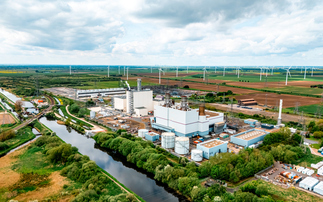
The strategy noted that it is unlikely enough waste biomass material can be found to meet the target – a fact underlined earlier this year, when energy giant Drax was criticised by some environmentalists for importing timber to fuel a new biomass co-firing facility at its coal-fired power plant in Yorkshire – and signalled for an expansion of rapid growth forestry plantations as a means of providing virgin timber to meet demand from biomass power plants.
A spokeswoman for Defra said the new research projects would assess the environmental impacts of short rotation plantations which are suitable for harvesting within six to 10 years, as opposed to the 20 year plus growing period reserved for most UK forestry. "We want to understand any sustainability impacts before we proceed further [with any plans]," she added.
The Forestry Commission England is to work with Defra on the project and will undertake ongoing monitoring of the hydrology, carbon balance, economic viability, biodiversity, and possible impacts on landscape and biodiversity associated with the new plantations.
Were the results of the research to be favourable, the government would likely look to expand incentives designed to promote the development of wood-based energy crops. Under its Energy Crops Scheme, plantations growing miscanthus and short rotation coppice, such as willow for use as an energy source, can qualify to receive support of 40 per cent of the establishment costs.
Think tank argues investment in forestry protection offers more cost effective and credible means of cutting emissions 27 Aug 2008
Agencies release biofuel targets and unveil $1.8bn in funding designed to accelerate switch to second generation fuels 06 May 2009
Survey of public sector IT managers reveals deep concern over ability to deliver on carbon-neutral targets 03 Jul 2009
From record-breaking solar panels to the International Renewable Energy Agency's new home, we round up the top stories from the past week 03 Jul 2009
Well, I hope they got a no win, no fee deal. I don't like being cynical (it's more of a congenital thing)... 03 Jul 2009