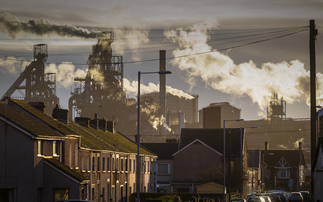
A Californian company has proposed a scheme to turn waste carbon dioxide into a chemical compound that could be used in everything from drywall and fertiliser, through to yoghurt and toothpaste.
Santa Barbara-based Carbon Sciences aims to build a pilot plant in two years that will convert CO2 into precipitated calcium carbonate (PCC). The material, which has a wide range of uses, can be produced using equipment of a similar size to commercial scrubbers, according to Derek McLeish, president and CEO of the company.
The process works by mixing water and carbon dioxide with rocks and minerals obtained from old mine sites, which are run through a mineral processor and combined in a convertor.
"The ideal situation is where you aren't doing much transportation of the mine tailings," McLeish said. "And the CO2 could come to you from a close source. Paper plants emit a lot of CO2, for example, and that's the perfect nexus for this technology." He added that paper plants could use their carbon dioxide output to produce PCCs which would then be reused in the paper production process.
McLeish posited the application as an alternative to carbon sequestration. Other applications in the future could include ethanol plants, which can produce lots of CO2 during the production of starches, and coal plants that have already implemented carbon separation equipment.
PCC is the first of 14 available materials that can be produced by the process, including Gypsum. The only waste products could come from unwanted materials in the rock particles and minerals, which would in any case be inert, he added.
The cost of the pilot plant has not yet been calculated. After it is built, the company plans to license the intellectual property to potential customers rather than building its own conversion utilities.
The firm is likely to face competition from several UK projects, similarly aiming to turn captured CO2 into usable products. Technology start up Carbon 8 is currently working on a similar process to produce calcium carbonate for use as an aggregate, while a team at the University of Newcastle are working on turning captured CO2 into cyclic carbonates, which can be used in the manufacturer of a wide range of products including plastic bags, paint stripper and solvents.
Researchers at Newcastle University develop catalyst designed to turn carbon emissions into cyclic carbonates used in paint stripper, solvents and plastic bags 29 Apr 2008
US company unveils biodegradable plastic binding agent made from 40 per cent carbon dioxide 02 Jul 2008
Researchers claim captured CO2 emissions could become valuable resource for plastic production 10 Apr 2008
Focus on energy savings through fuel efficiency for homes and public and commercial buildings 04 Jul 2008
ActionAid accuses G8 of driving more people into poverty by pursing biofuels and cutting agri-aid 04 Jul 2008
Businesses' new found focus on the environment may be welcome, but according to Conrad MacKerron, it is taking attention away from workers' rights issues – and the credibility of the entire green business movement could be at risk 03 Jul 2008
It may be a year old, but as Dell's Jonathan Perry explains, firms looking to get rid of their old IT kit still need to pay attention to the WEEE directive 02 Jul 2008
Telling customers about your environmental targets is all well and good but, as Paul Thomas argues, they are meaningless if you do not know how they are to be achieved 01 Jul 2008