Firms seeking to address the business risks posed by climate change were given fresh guidance last week with the launch of a new report, which presents a framework for assessing vulnerable businesses and sectors.
The report, Adapting to Climate Change: A Business Approach, from The Pew Center on Global Climate Change, sets out guidelines on how a company can assess risks posed by global warming across their operations, value chain and broader commercial operations.
The report, written by Frances Sussman, senior economist at consultancy firm ICF International and Randall Freed, vice president of ICF, argues that the business effects of climate change will vary considerably across different sectors of the economy and advises firms to be aware of how their sector will be affected.
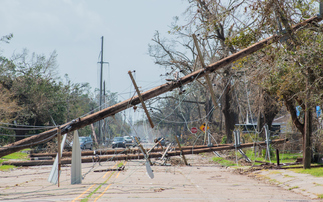
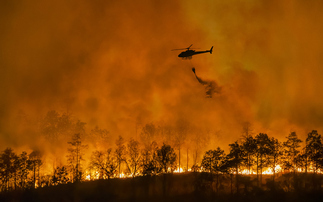
For example, the report noted that higher demand for air conditioning during prolonged heat waves could overwhelm the electricity sector. Similarly, frequent heavy rain could restrict access to construction sites leading to slow productivity in the building industry, while extreme drought could cripple the agricultural sector.
However, the report also warned that while some sectors will be affected more than others, "all businesses face the possibility of property damage and business interruption", plus possible problems with the supply of electricity, water and transport infrastructure.
The report concluded that despite these numerous threats, relatively few companies have developed global warming adaptation strategies noting that firms such as mining giant Rio Tinto, which is utilising high resolution climate modelling, to conduct detailed site assessments and gauge flood and drought risks for many of its property assets are the exception rather than the norm.
Eileen Claussen, president of the Pew Centre, stressed the importance of a long-term business strategy to adapt to unavoidable impacts of global warming and warned companies not to concentrate solely on reducing greenhouse gas emissions. "The private sector faces a range of risks and it is important that they begin now to assess their options and strategies for adapting," she said.
US research predicts droughts and increased storm damage will lead to soaring prices, job losses and major impacts to agriculture and other industries 24 Oct 2007
New report argues financial incentives are needed alongside improved guidelines on how to limit carbon and methane emissions 13 Dec 2007
But critics claim government must step up financial support for offshore wind projects if it is to avoid further delays 02 May 2008
Drax unveils plans for 400MW co-firing facility that would allow it to burn biomass alongside coal at its giant power plant 22 May 2008
As San Francisco enacts the US's first carbon tax, institutional investors call on the Senate to support binding emission cuts of up to 90 per cent by 2050 22 May 2008
House of Representatives votes in favour of extending renewables tax credits, but fears remain that incentives will be allowed to lapse 22 May 2008
Fresh from the acquisition of lighting specialist LPBV, Lighting Science boss Govi Rao explains how the expanded company plans to combat the supply constraints dogging the LED market 22 May 2008
With industrial plants wasting a huge chunk of the energy they generate through heat, scientists are exploring some wild and wacky ways of harnessing that lost power 21 May 2008
Firms may have woken up to the need to tackle global warming, but when it comes to adapting to its impacts too many remain fast asleep to both the risks and opportunities 20 May 2008