Several years ago, it was hard to find anyone who had a bad word for biofuels. They were "renewable", "natural", and "sustainable", and were widely embraced as the means by which a nasty fossil fuel based economy could be transitioned to a more moral and righteous state. In short, everyone fell in love with them.
But love is fickle, and nothing is harder on fantasy than reality. And so it is that those who were demanding renewables and biofuels at any cost now suddenly face the price: land use and biodiversity impacts; accelerating perturbations of other critical systems such as the nitrogen, phosphorus, and hydrologic cycles; increases in food prices as agricultural production shifts to biofuel end-use.
Moreover, because the relevant markets are global, so too the impacts: European and American policy decisions rapidly ramping up demand for biofuel do not just affect their citizens, but the food prices and well-being of people around the world - cruelly, especially the very poor. These are complex systems, and pretending they are simple doesn't cut it.
The critical lessons, although often overlooked, are not complicated. Most important, don't fall in love with anything - not an ideology, not a buzzword like "renewables" (we're still in love with that one), not a technology. Anticipate that any system worth considering - including biofuels - exhibits non-linear behaviour, especially if scaled up rapidly without allowing for adjustments throughout all the other systems coupled to it.
At some scale, technologies like these are generally good ideas; but at the higher scale of widespread implementation, they are quite likely to cause ugly complications, especially if demand is not eased in, but spiked (corn-based ethanol is a good, current example). Further complicating the issues is that over time, technologies become technically, economically and politically locked-in: trying to change America's corn ethanol policy has become far more difficult now. With interests including Midwest farmers, construction workers and venture capitalists recognising the potential benefits, these groups have changed farming patterns and investing in developing a corn ethanol infrastructure, and thus have a strong and vested interest in continuation of the program.
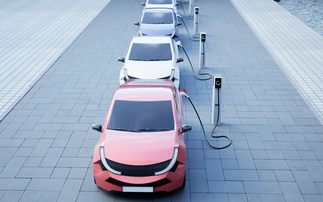
Problematic though it is, and even despite the backlash against corn ethanol on many fronts, we're in the midst of repeating the same problem. The hysteria over climate change, combined with the success of hybrid automotive technologies, is generating huge pressure for plug-in hybrid vehicles, which require no petroleum at all - locally, at least. Such vehicles are seen, and presented by their proponents, as "emissions free", "carbon neutral", " important moral statements", and otherwise worthy of falling in love with. Embracing this technology with wide-ranging policy measures may work, but it is just as likely, especially given the lack of systems understanding and analysis, that we will find ourselves facing corn ethanol déjà vu.
There's no question that plug-in technology is cool. Despite the technology issues - most notably finding batteries appropriate to automotive power demands and usage, figuring out viable combinations of on-board power, and delivering rapid recharge and in-depth charging infrastructure - the idea of using clean electricity to phase out one of the most obvious and intractable uses of fossil fuel, without having to do the difficult job of weaning people off cars completely, seems too appealing to pass up.
But there's a much bigger problem, and it's not discussed much. What happens if the activists succeed, and we suddenly lurch towards plug-ins? What kind of electric power production and distribution infrastructure does this demand spike imply (note that coal plants are the most likely and cheap addition to base load capacity under such a scenario)? At what point does the difference in technology time cycles (new car technology can cycle at a couple of years once the technologies are proven; energy infrastructure has half-lives of many decades) break the electric generation and grid systems? And as developed world technology tends to create powerful paths for future technological evolution, does this put countries such as China and India, already struggling to generate sufficient electricity for their development, yet further behind Europe and America? The simplistic answers one gets so far - "just use solar" - do not inspire confidence.
It's not that plug-in technology may not be useful at some scale. It's that, by falling in love with the technology, we once again blind ourselves to the questions we need to ask. And because it's not the first time - cf. biofuel - we need to ask ourselves some very basic, and very critical, questions about how we intend to rationally, ethically and responsibly face an increasingly complex and challenging anthropogenic planet.
This article first appeared at Greenbiz.com
Despite climate and energy security concerns, federal energy R&D spending has declined. Daniel M. Kammen reckons it's time for presidential candidates to explain how they are going to reverse this trend 12 Sep 2007
Arnold Schwarzenegger's California may be at the vanguard of the US' green revolution, but, argues Benoit Wirz, Florida and its growing biofuel market could soon be close on its heels 06 Sep 2007
Progress is being made to "get the carbon out" of transport fuel, says Daniel M. Kammen, and it is standards and regulation that is driving the improvements 08 Jun 2007
Building giant details plans to develop three more commercially viable zero carbon homes over next three years 16 May 2008
Toyota claims the iconic hybrid vehicle has helped cut global carbon emissions by approximately 4.5m tonnes in the last decade 16 May 2008
After two decades of development countless nanotechnologies are fast approaching commercial viability – and they have the potential to redefine the clean tech sector 16 May 2008
Green business courses are springing up think and fast, but as Vanessa Crossgrove Fry warns it could still be several years before we see Green MBAs take their place in the largest firms 14 May 2008