Personally, I blame Coldplay.
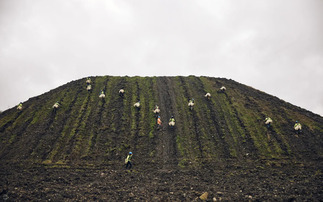
It was the revelation back in mid-2006, that an attempt to offset the band's carbon emissions through the planting of mango trees had been thwarted by the arid soil of southern India, and the subsequent demise of many of the 10,000 trees originally planted that first served to highlight some of the risks associated with the concept of carbon offsetting.
The CarbonNeutral Company, which under its former brand Future Forests worked with Coldplay on the project, may have committed to ensure that the band's emissions would be fully offset through more successful project, but for many critics the episode simply crystallised the concerns they already had about carbon offsetting. If the UK's favourite purveyors of stadia-filling melancholic melodies couldn't be sure their offsets were delivering the expected benefits, how could anyone else?
It was a question that was left to those in the corridors of Whitehall to try and answer when in early 2007 they announced plans for a quality standard and accompanying label designed to help customers select only "genuine" projects.
The proposals were initially welcomed by many within the industry as an ideal means of bringing some much needed clarity to the market and exposing the rogue operators who had given the sector a bad name.
But 18 months on, and with the formal launch of the government's quality assurance scheme imminent, many within the industry are concerned that far from boosting the market, the new standard could serve to undermine its recent growth and sideline many successful carbon reduction projects across the developing world.
Opposition to the government's proposals centre on its decision to initially only grant the quality label to carbon credits that had been formally certified through schemes such as the UN's Clean Development Mechanism (CDM) or the EU's Emissions Trading Scheme (ETS). Speaking at the unveiling of the draft standard earlier this year, environment secretary Hilary Benn maintained that only granting quality labels to those credits in the so-called compliance market represented the best means of ensuring that "when a consumer buys a tonne of carbon with the government's quality mark, they'll know they're buying a full tonne of carbon".
However, critics claim that the decision has the potential to do untold damage to the so-called voluntary carbon market, despite the fact that the verified emission reduction (VERs) credits available in the market have met voluntary standards that supporters claim are as robust as those imposed in the formal markets.
Speaking at a roundtable hosted by offset industry group ICROA yesterday, offset providers and customers joined to condemn the government's proposed standard and argue that its strict criteria would exclude many legitimate and effective carbon reduction projects.
Ben Dixon, programme manager for the Ashden Awards for Sustainable Energy which are given to successful green energy projects in the developing world, said that the reason many small scale carbon reduction projects do not gain accreditation under the CDM is not because they would not meet the criteria, but because the accreditation process is too costly and onerous for them to go through. He explained that carbon reduction initiatives, such as schemes that have seen more efficient stoves replace wood burning in homes in Africa and Asia, were delivering genuine and verifiable emission reductions but found it easier to gain financial support by selling voluntary credits.
Supporters of the voluntary market also dismissed the government's suggestion that the standards it uses were insufficiently robust compared to those followed by the UN, arguing that the triumvirate of leading voluntary standards – the WWF-backed Gold Standard, the Climate Community and Biodiversity Alliance standard, and the Voluntary Carbon Standard (VCS) – all require third-party verification and adherence to international standards for the measurement of carbon emissions and trading of credits. Similarly, the eight companies signed up to the new ICROA group have to subject themselves to third-party checks, adhere to a raft of best practices and report annually on their policies and processes.
Chris Shearlock, environment manager at the Co-operative Group, which has been a long standing supporter of carbon offsetting, argued that in some cases credits in the voluntary market could be more robust than Certified Emission Reduction (CERs) credits available through the CDM that will be able to boast the government's quality mark.
"We don't see the benefit of buying CERs that cost twice as much as credits in the voluntary market, when you consider that most of the extra money just ends up going to the western consultants paid to verify the CDM projects," he said. "We go and visit all the projects we're involved in and we're more confident they are delivering genuine emission reductions than if we were buying CERs on the open market."
Shearlock expressed frustration that under the government's proposals the projects the Co-op has deemed legitimate will not be able to carry the Defra quality mark. "We have problems with the way the code has been worded to exclude VERs," he said. "They are just as good as CERs, if not better, if you do your due diligence – I cannot understand why if we fund a wind farm in the UK we're heroes, but if we fund one in India we're not."
Mark Kenber, policy director at The Climate Group and chair of the Voluntary Carbon Standard, said that rather than attempting to sideline the voluntary carbon market legislators would be wiser to accept the positive role it can play as a testing ground for new forms of carbon offsets and trading mechanisms.
"The voluntary market has a fundamental role to play in preparing the terrain for the expansion of the compliance market," he explained. "If you look at forestry as an example, 17 per cent of emissions come from deforestation, but for a number of good reasons it is not currently included in the CDM. The voluntary market provides a means to experiment with a number of different approaches for making forestry credits work."
These protests appear to be falling on deaf ears.
A representative of Defra attending the roundtable admitted that the final version of the quality assurance scheme would look much like the original draft and that only credits in the compliance market would meet the grade. Although he did reiterate Hilary Benn's commitment earlier this year that the door remained open for VERs to carry the quality mark when and if they adhere to a single unified voluntary standard.
That is unlikely to be enough to satisfy offset providers who are now genuinely concerned that demand for credits from successful small scale carbon reduction projects could be curbed if they cannot attain the government's quality mark.
However, others remain bullish, insisting that unless that the government relax the criteria it is its scheme, rather than the voluntary market, that will be sidelined. "The government's code is only in the UK and I think many international organisations will continue to go with VERs," predicted Kenber. " If that means not getting the government stamp, then so be it."
Carbon trading boosted as US climate bill progresses and firms prepare end of year positions 27 Oct 2009
Cameron presents pre-election energy policy, promising greater investment certainty for low-carbon projects, green loans for households, and streamlining of planning system 19 Mar 2010
Joint statement from carbon exchange and Hungarian government aims to restore confidence in CER market 19 Mar 2010
From climate change contrarians to the "KitKatastrophe" of Nestle's palm oil policy, we look at the best the green web has to offer this week 19 Mar 2010
From the government's plans for a marine energy revolution to John Lewis' proposals for an off-grid supermarket 19 Mar 2010