Chancellor promotes fuller planes and greener cars

Pre-Budget Review delivers reforms to aviation tax and hints at more incentives for fuel-efficient cars

By James Murray

10 Oct 2007

Be the first to comment

Plane

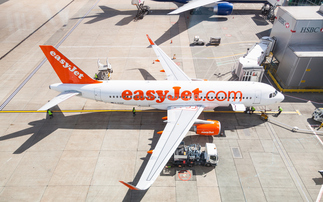
Chancellor Alistair Darling yesterday announced plans to reform the government's much criticised Air Passenger Duty in a move designed to encourage airlines to operate planes at higher capacity.

Speaking in his first Pre-Budget Review, Darling said that from 2009 he would shift duty on aviation from individuals to flights in order to "encourage more efficient use of planes". He also reiterated the government's commitment to expanding the European Emissions Trading Scheme (ETS) to include airlines despite widespread opposition to the plans from the aviation industry.

Conservative shadow chancellor George Osborne accused Darling of stealing the Tories' ideas on greener aviation taxation and argued that his failure to cut taxes in other areas meant the move represented a "stealth" rather than a " green" tax.

Environmentalists welcomed the move, which should also impose increased green taxation on the air freight sector, but some criticised the decision to wait to introduce the new tax until November 2009, while others maintained that tax on aviation fuel rather than flights would do more to promote investment in efficient planes.

Lisa Harker, co-director of think tank the Institute for Public Policy Research, said that while it made sense to tax flights rather than passengers, the government needed to take a broader approach to curbing emissions from flights.

"There needs to be better incentives and information for passengers to reduce their carbon footprint," she said.

Separately, Darling also moved to cut emissions from road transport, modifying the fuel benefit charge on fuel used in company cars to "strengthen the environmental incentive to drive fewer miles", and publishing an interim report from Professor Julia King, formerly of Rolls-Royce, on how to cut transport emissions.

The interim report found that it was currently possible to cut emissions from cars by a quarter by selecting the most efficient models and predicted emissions could be cut by 80 per cent by 2050 using new technologies. It concluded that it would be possible to attain an "almost complete decarbonisation of road transport" within the next 40 years.

The study estimated improvements in fuel efficiency would initially add £1,000 to £1,500 to the price of new cars, but predicted that these innovations would become standard within five years leading to a reduction in costs.

Darling hinted he would move to encourage wider adoption of greener vehicles when the full report is published at the next Budget, claiming he would deliver proposals "on ways to encourage the next generation of cleaner cars and incentives for people to buy them".

WHAT DO YOU THINK? Add your comment


Greg Barker has said that despite cuts to solar incentives the industry will continue to grow this year - is he right?

4%

6%

7%

83%

INSIGHT

Submit your email address and we'll send a link to a personal newsletter control panel


Mechanical Integrity Engineer

09 Feb 2012

Mechanical Integrity Engineer, 35,000-45,000, Midlands A global power organization are looking to identify a Mechanical Integrity Engineer to become part of a globally accalimed engineer department. Delivering R&D Projects in relation to the business' GAS and Steam Turbine operations - the role will challenge the engineers mechanical design capabilities and integrity of company products. The succe

APC

Guidelines for specification of data centre power density

The science and practical application of an improved method for the specification of power and cooling infrastructure for data centres

Quocirca

Powering the data centre

A look at alternative approaches to managing energy for cost and/or sustainability reasons in data centres