25 Sep 2008
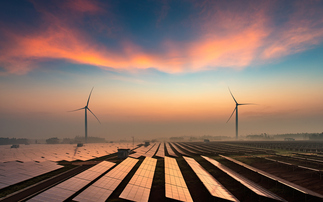
Clean tech firms specialising in energy efficiency, material design and packaging will become increasingly attractive to investors as venture capitalists begin to move away from the over hyped fields of solar and wind energy, according to a panel of industry experts.
Speaking at the Library House Essential Cleantech conference in London earlier today, Patrick Sheehan, founding partner of investment firm Environmental Technologies Fund, said that while it would be unfair to claim that clean tech was experiencing an investment "bubble", there was "too much enthusiasm" attached to some sectors, most notably solar.
His comments were echoed by Luciano Diana, vice president and head of clean energy equity research at Morgan Stanley, who added that the onset of recession would make it harder still for more established clean tech sectors to attract investment.
"Only the better projects will find capital," he said. "We'd expect to see a deceleration in growth for wind, for example. It'll still expand at over 20 per cent… but higher capital costs and lower returns will mean the rate of growth will slow."
However, experts agreed that while some firms will find it harder to attract investment, less high profile green technologies should still be able to raise capital.
"If you look at areas like solar there are a lot of people on that bandwagon, so investors are starting to look not at whole sectors, but niches within those sectors' supply chains," explained Dave Raval, manager of the Carbon Trust TTP Incubator. "We've invested in a company called Orecon, for example, which is developing [energy] converters for the marine sector. No one else is making those at the moment but it is an area where someone will make a shed load of money."
Similarly, Sheehan highlighted suppliers of new materials, primarily in the field of packaging, as a low profile but potentially attractive area for investors.
However, it is improvements in energy efficiency that experts agree represents the next "hot sector" for clean tech investors.
"We have built our economies based on the assumption of cheap energy," observed Justin Adams, business unit leader for venturing at BP Alternative Energy. "But that is an assumption that is no longer valid for the coming decades. That means there is a huge opportunity to be had in energy efficiency. "
Sheehan added that the focus on cost cutting engendered by any economic downturn would also help raise the profile of energy efficiency, arguing that improvements in the efficiency of industrial processes would be required alongside advances in the efficiency of electrical appliances.
"You can find niches in these industrial sectors, that, when you look at them closely, turn out to be huge," he said.
LATEST STORIES ABOUT INVESTMENT
YOU MAY ALSO LIKE
LATEST JOBS
TODAY'S TOP STORIES
HIGHLIGHT
Solar sector warns proposed cuts to feed-in tariffs would make it impossible for them to deliver promised rates of return
INSIGHT
INSIGHT
The science and practical application of an improved method for the specification of power and cooling infrastructure for data centres
A look at alternative approaches to managing energy for cost and/or sustainability reasons in data centres
WHAT DO YOU THINK? Add your comment