Have you cheated on your partner recently? No worries, you can offset the emotional damage and neutralise your conscience simply by funding someone else to be faithful. Some of you probably have to cheat regularly for work, so this service will be of particular interest.
Cheat Neutral is a brilliant website satirising the carbon offset industry, a burgeoning sector that allows people to assuage their frequent flier guilt by making a small donation. Even the Queen is getting in on the act; her recent travels in America were offset, making her the first monarch to do so.
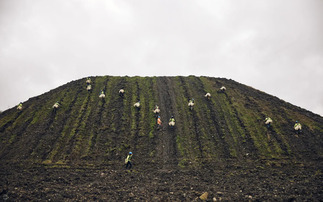
It's an easy sell for a society that's always looking for a quick fix, whether it is a pill to shed pounds or a cream to reduce wrinkles. Carbon offset payments go towards projects that aim to reduce carbon emissions to the degree you are creating them. This formula has been ripped apart by critics lately for being ineffective and in some cases - where massive tree plantations have been left to die due to improper management - actually causing harm to the environment.
It used to all be so simple. You paid someone to plant a couple of trees and your flight was no longer a carbon emission catastrophe. But now the mushrooming market of carbon offset firms is creating controversy and confusion. Who do you offset with? Is your money best put towards a bio-mass stove scheme in India or energy efficient light bulbs for Eastern European schools? Why has tree planting become passé? And why do the carbon calculations of the same flight vary so widely between offset schemes?
At Global Action Plan we offer businesses and individuals considering offsetting the following advice:
Primarily, carbon offsetting should only be used as an absolute final step in reducing your carbon emissions. Take every precaution you can to lighten your footprint first. As most people use offset services for their travel we recommend taking holidays via train, bus, boat, bicycle, foot, or even car before you get on a plane. As for business travel, try to encourage your employer to use phone or video conferencing instead of flying staff somewhere for a meeting. You may be pleasantly surprised at their willingness to do so, especially when they realise how much money they'll save.
If you have no choice but to travel then first up ensure the method you are using to offset is scientifically valid and either has the WWF Gold Standard, which ensures offset projects reduce carbon emissions and foster sustainable development, or will meet the Government's new proposed code of practice currently under consultation. DEFRA says it will have a code in place for Autumn 2007.
You should also always seek proof that the offset scheme is additional - that is that the project wasn't going to be done anyway - and that the benefits of the project are long term. Ask how much of your money is going towards offset projects and how much is going towards administration costs.
Getting back to the original offset darling, the tree, one should be particularly wary of forestry schemes as a neutralising method for several reasons: space limitations mean forestry schemes invariably push against fertile agricultural lands, denying farmers their livelihood; offsetting the West's carbon in the developing world is really just pushing the problem onto the shoulders of others, and asking third-world farmers to surrender their lands to forests is unjust; and there are inherent problems with measuring the exact amount of carbon offset by planting a tree.
Perhaps most concerningly there are also questions about the effectiveness of trees as a carbon sink. Young trees don't deliver their full absorption potential and take years to reach maturity; forests can easily be cut down if not monitored effectively; older forests become only 'carbon neutral' because decomposing wood emits carbon again; beyond a certain global temperature forests, like other natural sinks, will become net emitters of CO2; and lastly, planting dark forests where there were previously light soils and grasslands reduces the albedo (reflectivity) of the earth, thereby marginally increasing the likelihood of warming.
Given all these concerns you should also be particularly scrutinising of any company that boasts about being 'carbon neutral'. This trend couldn't be any hotter even if Kate Moss hawked it at Topshop. But many companies who proclaim themselves carbon neutral are paying a hefty fee to an offsetting company to counter their emissions, instead of making practical changes in their facilities and encouraging behavioural change amongst employees. They still churn out emissions; they've just paid to be painted green.
Before patronising such a company, ask questions – how exactly are they carbon neutral? Who are they paying to offset their emissions and where is that money going? Or if you work for a company that claims this title try to find out more about what's behind the label, and encourage them to change from within.
That pill never did give you a bikini body, and it was always exercise and healthy eating that would get you there in the end wasn't it? Making small practical changes to you and your workplace's environmental behaviour, is the key to reducing carbon emissions. And when you are left with some unavoidable emissions, just be sure to use a reputable offset service to shed those final pounds.
Amy Sims is Communications Manager at Global Action Plan.
The company you work for has just gone carbon neutral, but how do you - as an individual - know which retail offsets really reduce greenhouse gas emissions? Alice Kenny investigates 18 Mar 2008
IT giant Dell has said it wants to be the "greenest technology company on the planet". BusinessGreen asks Tod Arbogast, the man charged with making it happen, how the company plans to live up to its bold environmental claims 20 Mar 2008
BusinessGreen takes a look at the top 10 Christmas gifts for the environmentally conscious executive in your life 13 Dec 2007
Chris Burgess, Vodafone's director of corporate responsibility, reveals how and why the mobile giant came to commit to a halving of its carbon emissions 24 Apr 2008
Focus on energy savings through fuel efficiency for homes and public and commercial buildings 04 Jul 2008
ActionAid accuses G8 of driving more people into poverty by pursing biofuels and cutting agri-aid 04 Jul 2008
Businesses' new found focus on the environment may be welcome, but according to Conrad MacKerron, it is taking attention away from workers' rights issues – and the credibility of the entire green business movement could be at risk 03 Jul 2008
It may be a year old, but as Dell's Jonathan Perry explains, firms looking to get rid of their old IT kit still need to pay attention to the WEEE directive 02 Jul 2008
Telling customers about your environmental targets is all well and good but, as Paul Thomas argues, they are meaningless if you do not know how they are to be achieved 01 Jul 2008